
Farm Stays With Animal Encounters: What Actually Happens
Not a schedule of activities. The feeding round, the eggs, and the goats deciding whether they like you, on a working smallholding in west Cornwall.
Can children feed the animals on a farm stay?
Here, yes. Children can hand feed the pygmy goats, collect eggs and meet the ponies, with an adult and with the usual rules about approaching a horse. The birds of prey are handled by the family only. Nothing is timetabled, and nobody has to take part in any of it.
Farm stays are sold on the animals and then described in the vaguest possible terms. So here is the specific version, which is what people actually want to know before they book with children.
What you actually do
Morning feed is the main event and it happens whether or not anybody joins in. Goats first, because they are loudest. Then the eggs, then the ponies.
Evening feed is the same in reverse and quieter. In between, the goats will come to the fence whenever somebody walks past, which is most of what small children want from a holiday.
There is no talk, no tour and no set time. If you want to help you turn up, and if you do not you sit in the hot tub instead.
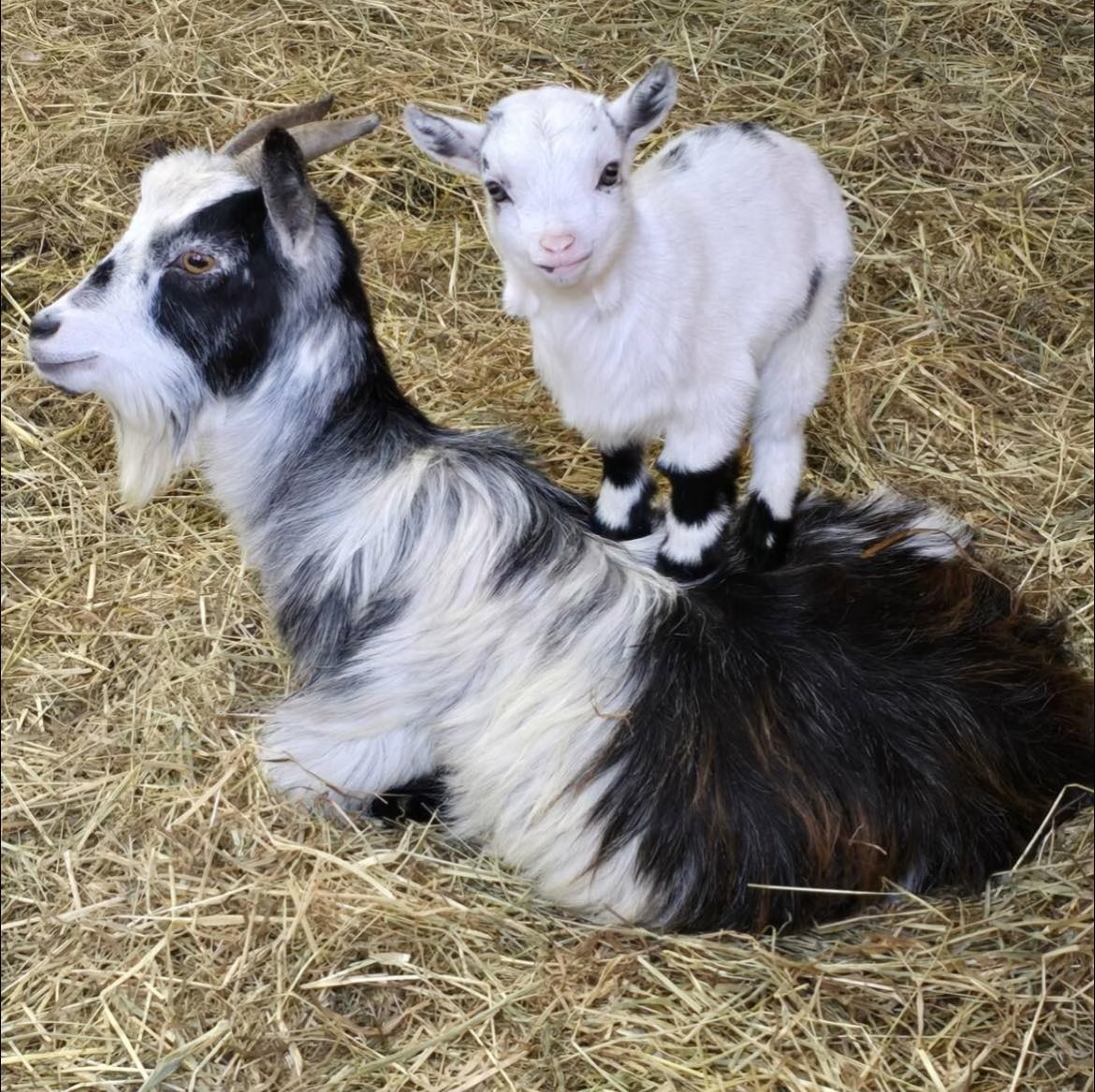
The goats come to the fence. You do not have to go and find them.
Which animals, and which ones you can touch
Pygmy goats. Hands on, and the reason most children do not leave the fence. They are small, sturdy and entirely used to people.
Ponies and horses. Hands on with supervision. Approach from the front, do not run behind them, and ask before feeding anything.
Hens. Egg collecting, which is the single most popular ten minutes of the week.
A red-tailed hawk and a southern white-faced owl. To look at, not to handle. They are flown by the family and that is a welfare decision. If you are interested in what keeping them involves, it is written up in the best first bird of prey.
Barn owls, tawny owls, buzzards, swallows and Canada geese. Wild, and entirely on their own schedule.
What suits young children, and what does not
The goats suit almost any age with an adult attached. Egg collecting suits anybody who can carry an egg. The ponies suit children who can be told something once and remember it.
What does not suit small children is a working yard at feeding time when everybody is busy, and mud, of which there is a great deal from October to April. Bring boots you do not mind losing to it.
Nothing here is fenced off into an attraction. That is the appeal and it is also the thing to be clear-eyed about before you book.
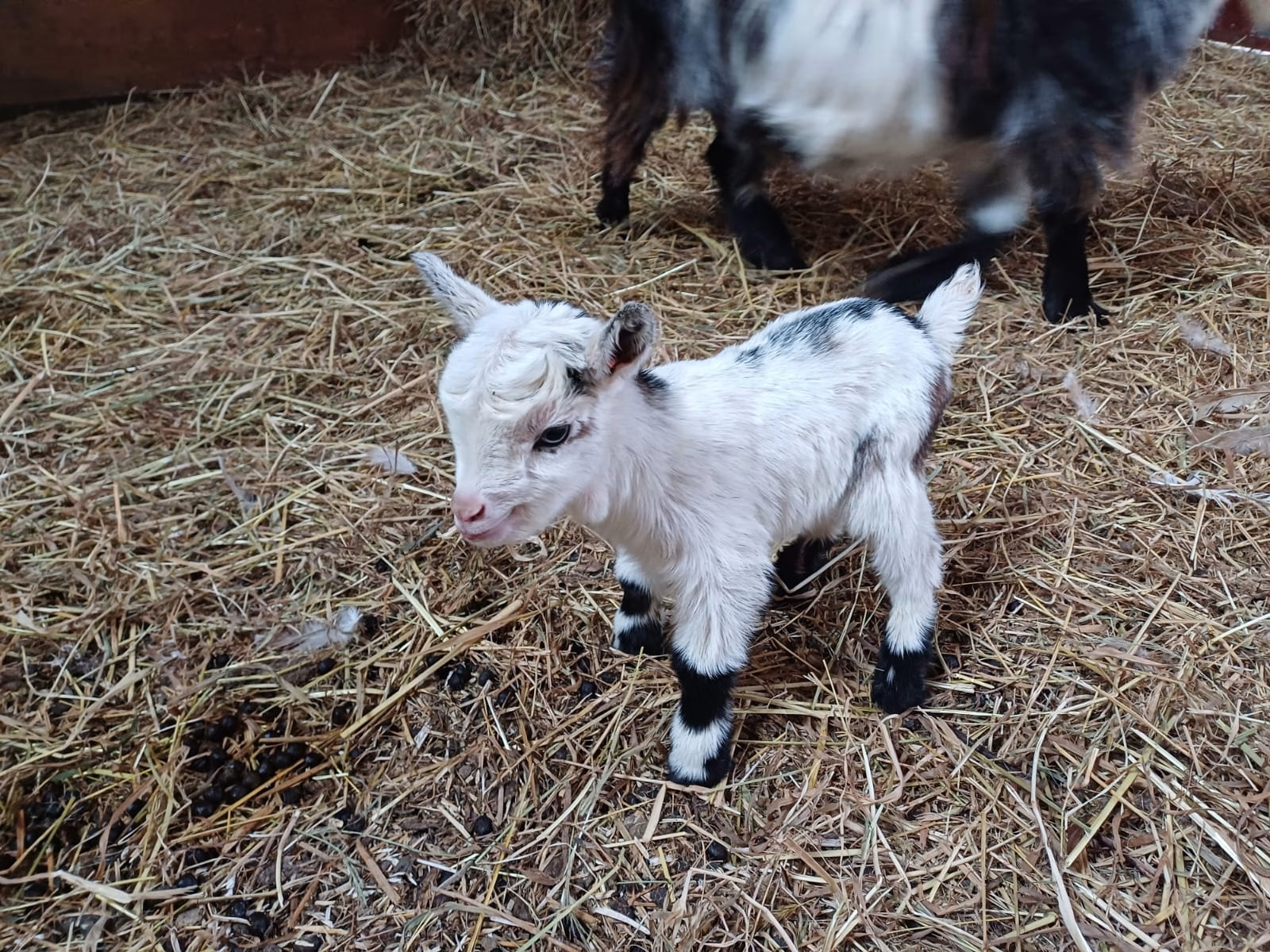
Kidding is the best week of the year to be here, and it cannot be booked.
What a farm stay with animal encounters is not
It is not a petting zoo, and the difference is not snobbery. A petting farm exists for visitors, opens at ten and has staff whose job is you. A working smallholding has animals that are fed at the same time every day for their sake, and guests fit around that.
The compensation is that it is quiet, it is real, and the animals are not tired of people by August.
Where this happens
At Gwel-an-Derowen, our one cottage, on the farm. What the cottage itself is like is on stay on a farm with animals, and the husbandry behind the goats is in keeping pygmy goats.
Field Notes
What guests ask before they arrive with children.
Can toddlers take part in animal encounters?
Yes, with an adult holding on. Pygmy goats are the right height for a toddler and they are used to being approached. Hand feeding is the part small children manage best, because it does not require them to be gentle in a way they cannot yet be.
Do you have to take part?
No. Nothing here is scheduled and nobody is expected anywhere. Plenty of guests watch from the terrace and that is a perfectly good holiday.
Are the animals used to visitors?
The goats and the ponies are, completely. The birds of prey are handled only by the family, which is a welfare decision rather than an insurance one.
What is the difference between this and a petting farm?
A petting farm exists for visitors and opens at a time. This is a working smallholding where the animals are fed whether or not anybody is staying, so the encounters happen at feeding time and they are quieter.
Can you collect eggs?
Yes, and it is the thing children ask to do again. The hens lay when they lay, so some mornings there is nothing to collect, which is also a useful lesson.
Is it safe around the horses?
With supervision and the usual rules: approach from the front, no running behind them, and no feeding without asking first. The ponies are quiet. They are still half a tonne of animal.
Written by the family who keep these animals at Noonvares Farm in west Cornwall. Everything on this page describes this farm rather than farm stays in general.