
Riding Holidays When You Have Never Ridden
Almost every riding holiday advertised as suitable for beginners is sold by somebody who has not sat a complete beginner on a horse in years. We do it here, and this is what it is actually like.
Can you go on a horse riding holiday as a beginner?
A trekking or beach centre will take somebody who has never sat on a horse, on the first morning, and has staff and horses kept for exactly that. A trail week that moves between villages, and an Iberian schooling week, will not: they assume you can already ride at all paces for several hours. Horse riding holidays in the UK for beginners are almost always the first kind, based at one yard, riding out and back each day, and that is the shape to look for.
What suitable for beginners means, and what it does not
The phrase is doing two quite different jobs on two quite different pages, and the pages look the same. The wider category, and what separates one kind of week from another, is set out on horse riding holidays.
On a trekking centre it usually means what you would hope. There is a string of quiet horses kept for people who cannot ride yet, somebody walks beside you for the first hour, the first day is an hour or two at walk on ground the horses know, and nobody is going anywhere you cannot get back from.
On a trail or a long-distance ride the same phrase means something much narrower. It means a beginner in the sense of somebody who has ridden for a year and never done six hours in a day. Those weeks are sold with the same photograph of a horse on a beach and the same three words, and the gap between them is the single most useful thing to know before you enquire anywhere. If a week moves you between beds, expects five or six hours in the saddle and mentions cantering in open country. It is not a first riding holiday, whatever the page says.
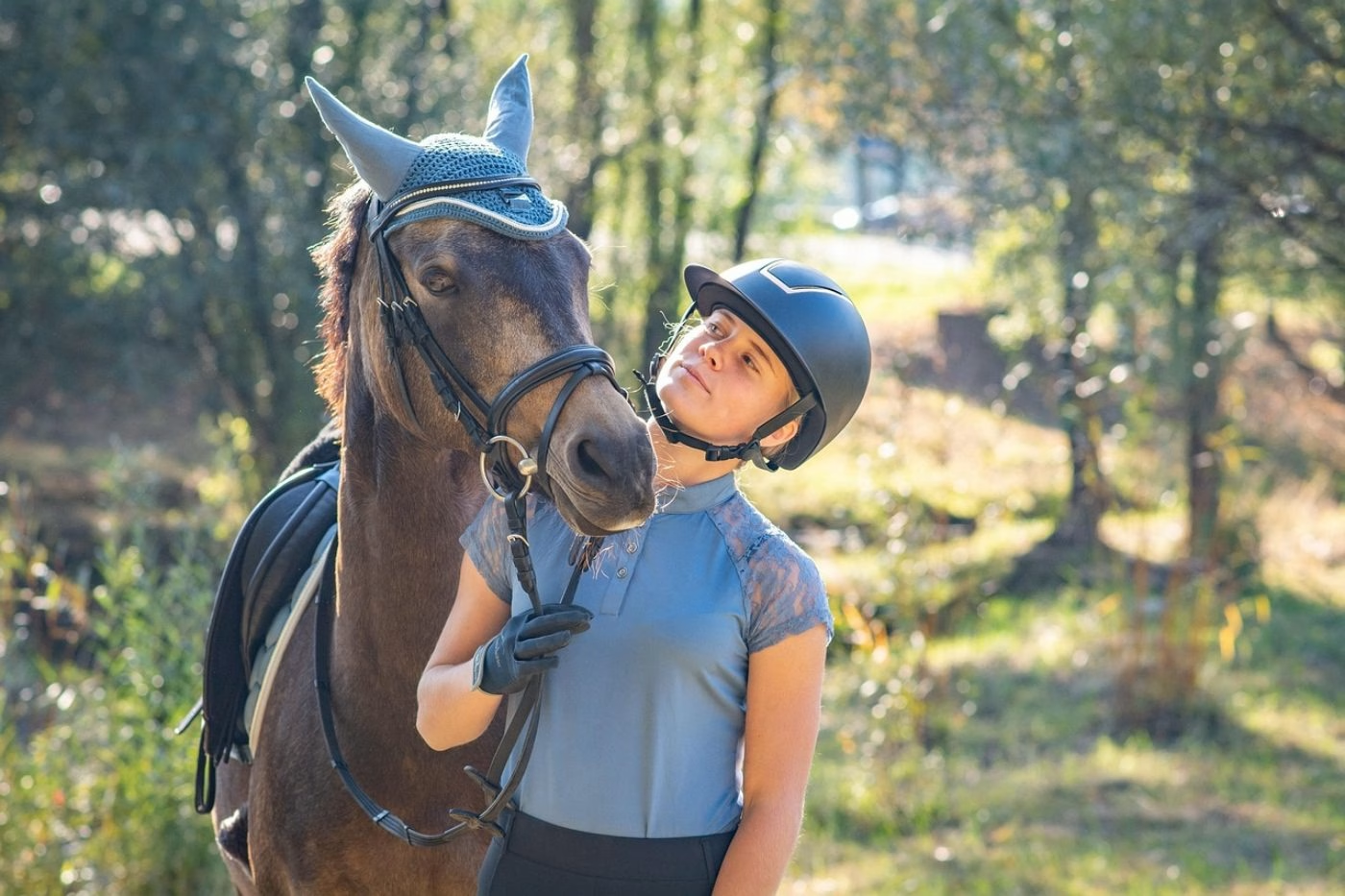
Before setting out.
There is a third use of the word and it is the honest one: a yard that says plainly it takes complete beginners, says how many horses it keeps for them, and asks you what you have actually done. That yard exists in every riding county in Britain and Ireland, and it is rarely the one with the best photographs.
The first morning, and what actually happens in it
Very little of the first morning is spent riding, and that is the point of it rather than a disappointment.
You will be asked what you weigh. It is not rudeness and it is not a formality: a horse carries roughly fifteen to twenty per cent of its own bodyweight in rider and tack, so the answer decides which animal you are given, and a yard that does not ask is a yard that is guessing. You will be fitted with a hat. You will meet the horse on the ground first, and somebody will show you how it is led, where to stand, and which side to get on from.
Then the mounting block, and then walking. A first session is commonly an hour, occasionally two, almost never longer, and a good deal of it is spent learning to stop and to steer rather than to go. Trotting arrives on the first or second day and is the part that surprises people, because rising to the trot is a coordination problem rather than a strength one and it clicks suddenly rather than gradually.
Cantering, on a genuine beginners week, is usually day three or four and is optional. Any yard offering a canter on the first morning is telling you something about how it runs.
How much riding a beginner can actually do in a day
Less than the brochure, and much less than you would like.
Two hours is a full first day. Three is a hard one. Four hours in a day is what an experienced rider does without thinking and what a complete beginner cannot yet do at all, because the limit is not fitness in the ordinary sense. It is the particular muscles along the inside of the thigh and the lower back that nothing else in daily life uses, and they give out long before the rest of you is tired.
The soreness is real and it is worth expecting rather than being surprised by. It arrives properly on the second morning rather than the first, it is worst on day two and three, and it has usually settled by day four. Riders call it the second-day walk, and every yard that takes beginners has watched a whole group do it across the yard at breakfast. A week is therefore usually built as two hours, two hours, a lighter morning, then longer days once everybody has loosened up.
What a horse riding holiday in the UK for beginners costs beyond the riding
- Riding insurance. Most travel and home policies exclude horse riding, and several that include it exclude riding off road or without a hat. A rider policy runs roughly £30 to £60 for a week.
- A hat that fits you. Loan hats exist at almost every centre and rarely fit properly. A hat that does not fit does very little, so this is the one piece of kit not worth improvising.
- Boots with a small heel. Wellingtons and trainers are both wrong, for the same reason: a boot has to stay out of the stirrup if you come off. Jodhpur boots are inexpensive and any yard will tell you what it expects.
- Long trousers that do not have a seam down the inside leg. Jeans are the usual mistake and the inside seam is why.
- Gloves, which nobody thinks about until the third day of holding reins.
- A tip for the staff, customary at most yards and included nowhere.
Indicative at September 2026, and these are your own costs rather than ours.
Where a beginner is best served in Britain and Ireland
The shortest answer is the places with the most trekking centres, because a trekking centre is the shape of business that has always taken people who cannot ride.
Wales is where pony trekking was invented and it still has more centres per square mile than anywhere else in these islands, on Welsh Cobs that will carry a grown adult all day. Ireland has beach and estate centres that take beginners all season, and a culture of putting people on horses that runs deep. Scotland has fewer centres and more space, which suits somebody who wants quiet rather than company. In England, Dartmoor has both the commons and the open moor, and the ponies to go with them.
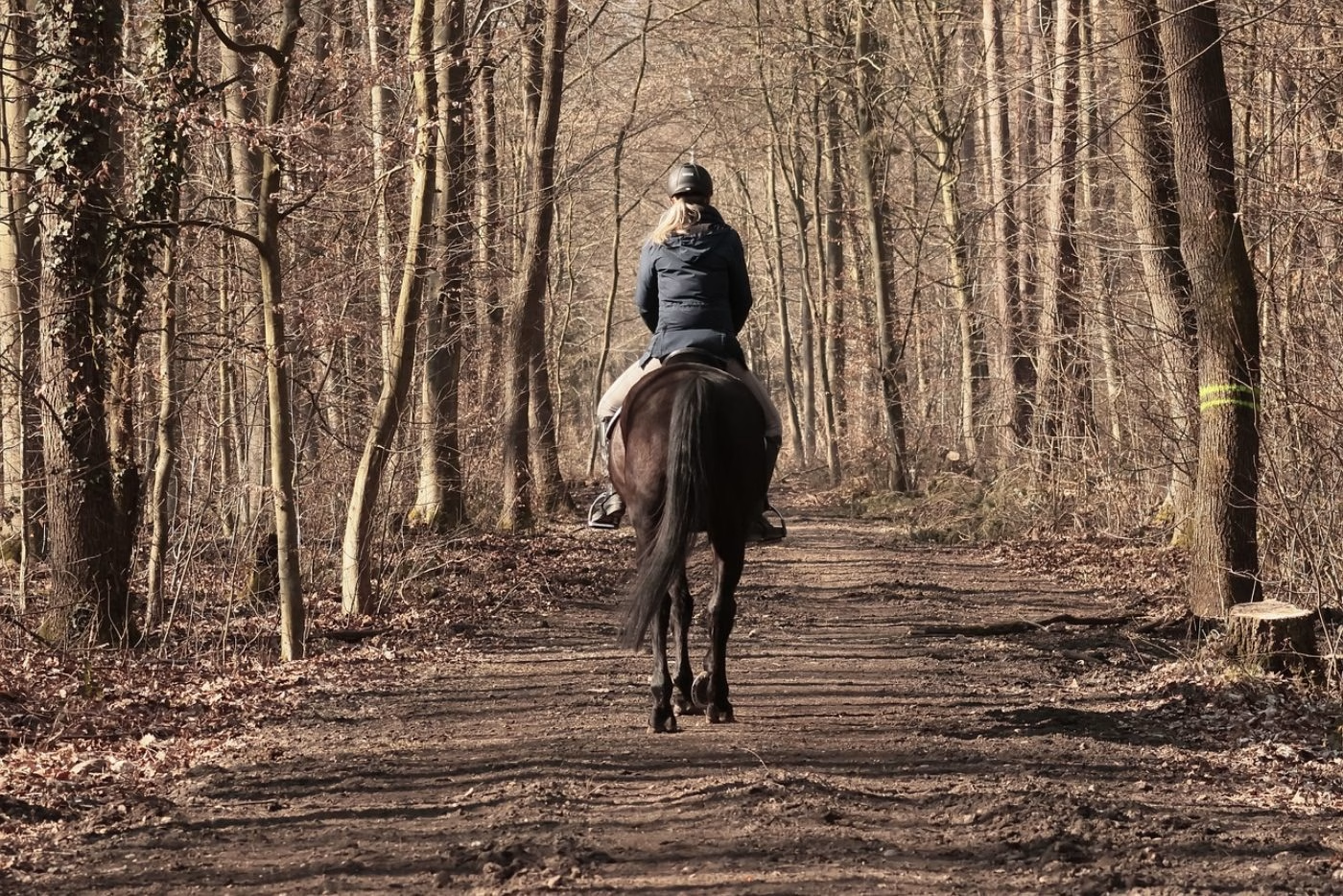
An ordinary morning’s hacking.
What all four have in common is worth saying plainly: they are close, they are cheap to reach, and you can come home on the fourth day if it turns out that being on a horse is not for you. That is a real advantage over a week somewhere you have flown to, and it is the reason a first riding holiday is usually better taken near home than far from it.
Tell us what you have ridden, and we will point you at the right yard
What a yard that genuinely takes beginners does
Four things separate a centre that teaches beginners from one that tolerates them, and all four are visible before you book.
It asks you questions first. Weight, height, what you have ridden and when, and whether you have any injury that matters. A yard that takes a booking without asking any of that is matching you to a horse by luck. It owns its horses. A string kept all year is a string whose every animal somebody knows, and matching a nervous rider to the right horse is the whole skill. It says how many horses it keeps for beginners, which is a number, and a small one at a good yard rather than a large one at a poor one. And it separates its rides by ability, so a first-timer is not quietly added to a group of people who have been riding for twenty years.
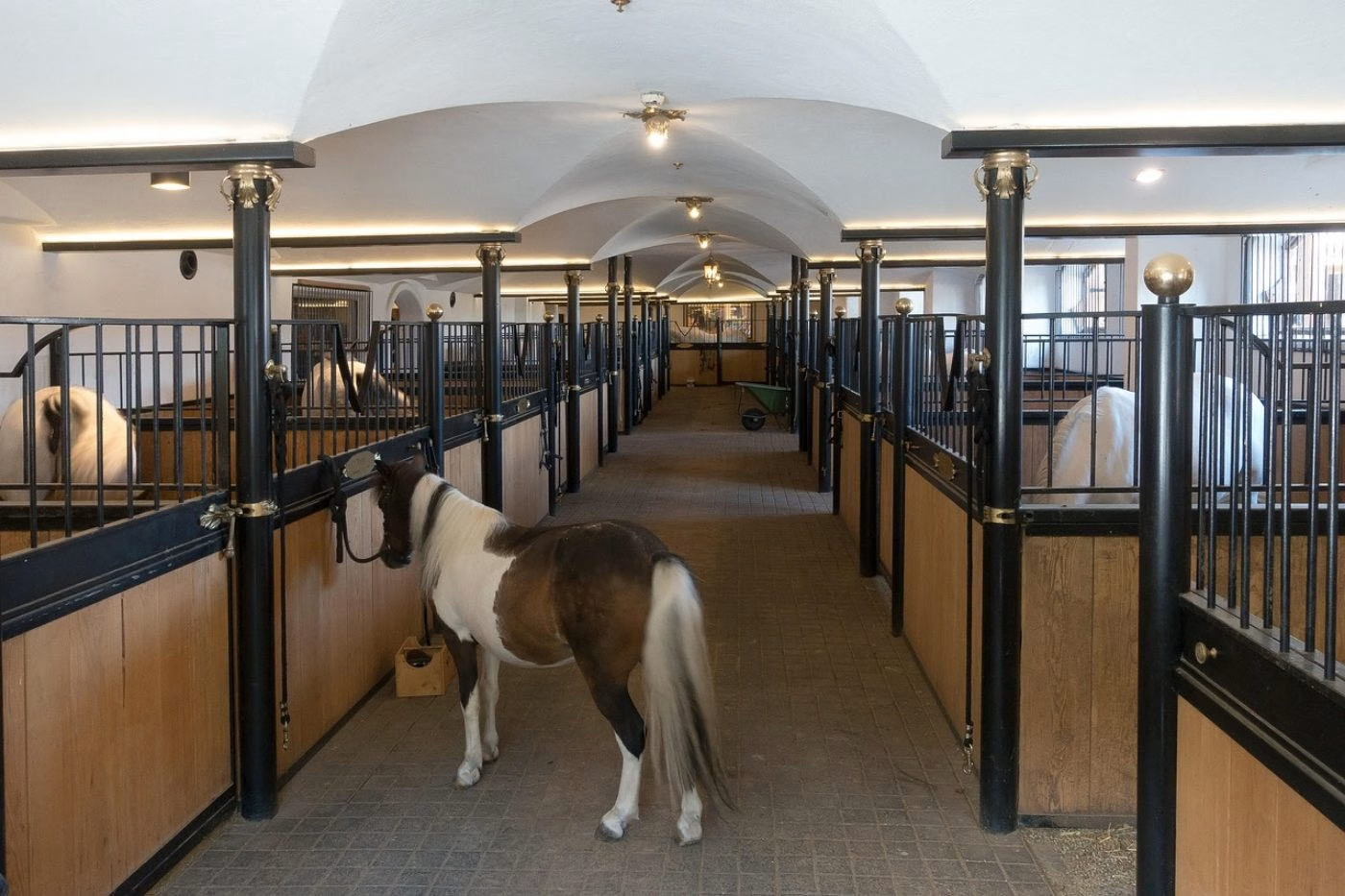
A yard that keeps its own string.
The one thing worth being straight about in return is your riding. Every yard in the country has had somebody arrive describing themselves as a confident rider on the strength of a pony trek in 2009, and the animal chosen for that description is not the animal they needed. Say what you have actually done, how long ago, and how often. You will get a better horse for it.
Notes from the farm
Elizabeth’s view. We put people on horses here who have never sat on one, and the thing that surprises them is never the riding. It is how much of it happens on the ground. You spend the first hour with the horse rather than on it, learning where to stand and how to lead, and by the time you are in the saddle the animal is not a stranger. That hour is the difference between a good first day and a frightening one, and it is the first thing I would look for. The second is honesty about what a beginner can do. Anybody who tells you that you will be cantering along a beach on the second afternoon is selling you a photograph. You might, on the fourth. What you will certainly do is spend three days discovering muscles you did not know about, and then, somewhere around day four, stop thinking about your hands and your heels and simply look at the country you are riding through. That is the moment people come back for.
Message us about a first riding holiday
The Beginner’s Compendium
Can you go on a horse riding holiday if you have never ridden at all?
Yes. Trekking and beach centres across Wales, Ireland, Scotland and the west of England take complete beginners all season and keep horses specifically for them. What a complete beginner cannot yet book is a moving trail week or an Iberian schooling week, both of which assume you can already ride at all paces for several hours a day.
How many lessons should you have before a riding holiday?
None are required for a centre-based beginners week, because teaching you is what that week is for. Four or five lessons beforehand change the holiday considerably though, because they get the first two days of walking and steering out of the way and leave you free to enjoy the rest. If you intend to book anything that moves between beds, treat six months of weekly riding as the realistic minimum.
How fit do you need to be to go on a riding holiday?
Ordinary fitness is enough for two or three hours a day, which is what a beginners week actually involves. Riding uses the inside of the thigh and the lower back in a way nothing else does, so general fitness helps less than people expect and the limit arrives sooner than they expect. Walking and anything that works the core are more use beforehand than running.
Is there a weight limit for horse riding holidays?
Almost always, and it is about the horse rather than about you. A horse carries roughly fifteen to twenty per cent of its own bodyweight in rider and tack, so a centre with heavier native horses will carry more than one with lighter animals. Most British centres publish a limit somewhere between thirteen and sixteen stone. Ask before booking rather than on arrival, because the answer decides which horse you are given.
What should you wear on a riding holiday as a beginner?
Long trousers without an inside seam, boots with a small heel, and a hat that fits you. Jeans are the common mistake and the seam is why. Gloves matter more than they sound by the third day. Most centres lend hats, and a borrowed hat is better than none, but one that has been fitted to your head is a different thing.
How sore will you be after a day of riding?
Sore, and on the second morning rather than the first. It affects the inside of the thighs and the lower back, it peaks on days two and three, and it has usually eased by day four. A week built for beginners allows for it, which is why the early days are short and the longer rides come later.
Are horse riding holidays safe for beginners?
Riding carries real risk and no honest yard pretends otherwise. What a good beginners centre does is reduce it in specific ways: quiet horses kept for the job, a hat on every rider, ground that the horses know, rides separated by ability, and somebody walking beside you on the first day. Riding insurance is worth buying separately, because most travel policies exclude it.
What is the difference between pony trekking and a riding holiday?
Pony trekking is riding at walk, sometimes with a little trotting, on quiet native ponies over known ground, and it was invented in Wales for people who cannot ride. A riding holiday is the wider term and covers everything up to a week of six-hour days across a mountain range. For somebody who has never ridden, a trekking centre is the reliable form of the thing.
Where we fit
MORE ON HORSES, FROM THIS FARM
What an equestrian holiday even is, and how the kinds of week differ from one another, sits on horse holidays. For a first week the country pages worth reading are Wales for trekking, Ireland for the strand and the estate, Scotland for space, and Dartmoor for the English moor. If you have not settled on a country at all, horse riding holidays in Europe sets them side by side. We keep horses, a cottage and stabling here in west Cornwall, and the farm cottage is where people stay when they come to us. The cover a riding week needs is a separate question, and horse riding travel insurance sets out which clauses decide whether it is covered at all. Further afield, Mongolia on horseback is the same idea taken to its limit: a point-to-point week on a semi-feral horse across country with no fences in it. On the other side of the world, horse riding in Argentina runs on a criollo schooled to neck rein and an estancia that is still a working cattle farm, and its season is a British winter.
Sources. The bodyweight guidance is the widely used fifteen to twenty per cent figure, a rule of thumb rather than a regulation, and individual yards set their own limits. The soreness, the shape of a first week, the questions a good yard asks and the judgements throughout are our own, from keeping horses and from putting beginners on them at this farm. Insurance exclusions are the common pattern across UK travel policies and should be read on your own policy rather than taken from here. Costs are indicative at September 2026 and are your own rather than ours. Reviewed September 2026.