
Horse riding · England
Horse Riding in Somerset
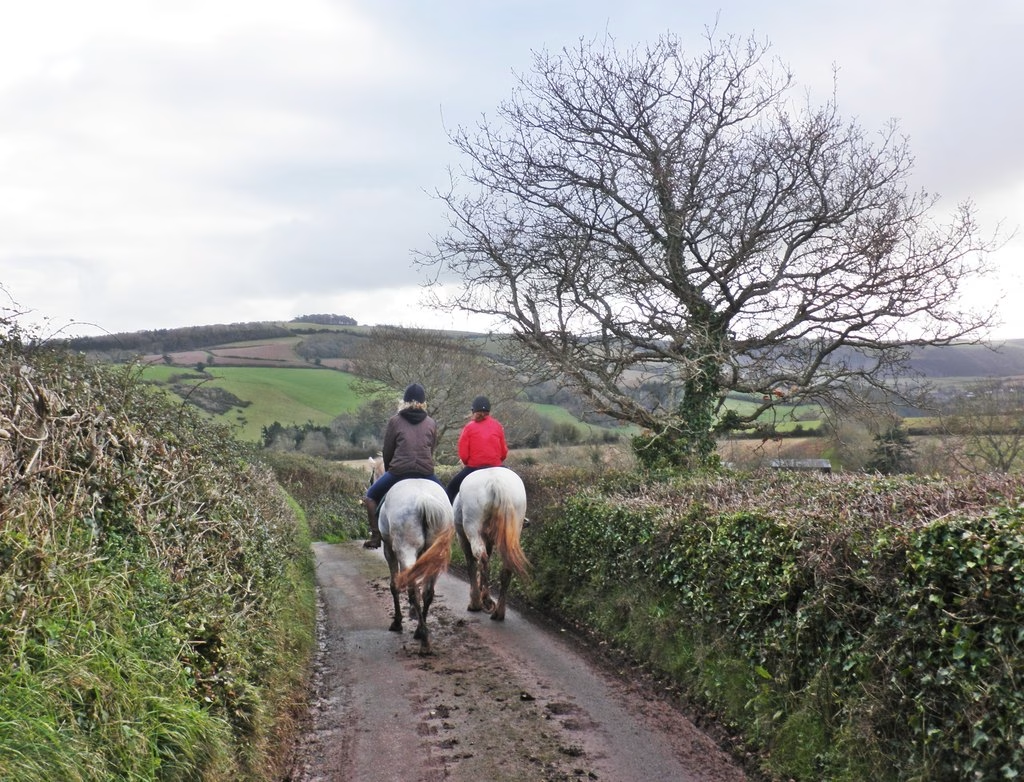
Somerset's horse riding is concentrated on Exmoor and the Quantock Hills, where most of the county's bridleways lie. Expect open moorland, woodland tracks, steep combes and livestock on the way.
At a glance
The short answer
- Best monthsMay to September, with the heather out in late summer
- Riding level
Novice to expert, by route - TerrainOpen moorland, woodland tracks, farmland and lanes
- Where to rideExmoor National Park and the Quantock Hills
- AccessBridleways and restricted byways; no general right to ride on access land
- Long-distance routeColeridge Way ride, 34 miles from Nether Stowey to Exford
- Bridleways on ExmoorOver 300 miles
Where to ride
Where to ride in Somerset
Most riding in Somerset is on Exmoor and the Quantock Hills, because the British Horse Society records that most of the county's 1,001 km of bridleways lie in those two areas.
Exmoor National Park covers 267 square miles. The Exmoor National Park Authority describes over 300 miles of bridleways there, on wide open moorland, woodland tracks, farmland fields and country lanes. You should expect livestock on the way, which the Authority calls a regular occurrence.
The Quantock Hills are low hills that run ten miles between the Vale of Taunton and the Bristol Channel. You keep to the bridleways and suitable tracks, and they give you a mix of climbs, ridges and shaded descents.
Elsewhere the network is thin. The British Horse Society says it is very fragmented outside Exmoor and the Quantocks, and that many restricted byways are dead ends. A ride from a yard in the Levels or the Mendips needs more planning, so ask before you assume you can ride out from the gate.
Rights and rules
The rules for riding on Exmoor and the Quantocks
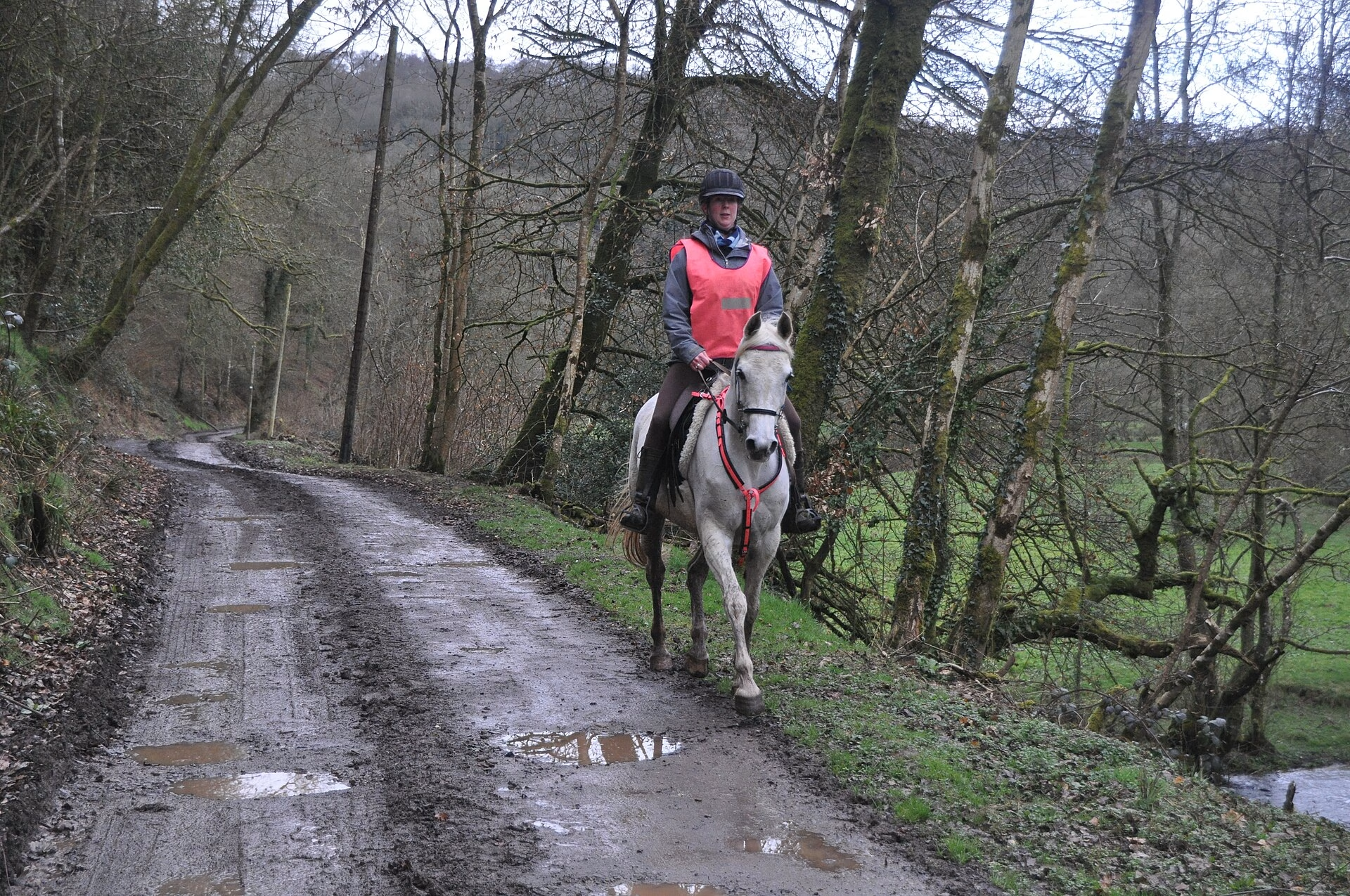
You may ride on public bridleways and restricted byways, and not on footpaths, which the Exmoor National Park Authority marks yellow for walkers only.
On Exmoor, blue waymarks show a public bridleway used by walkers, riders and cyclists. Purple waymarks show a restricted byway, which also takes carriage drivers. The Authority manages the rights of way with delegated authority from Devon and Somerset County Councils.
Open access land follows a different rule. The Authority states that the Countryside and Rights of Way Act does not permit horse riding on access land. The British Horse Society says riders can ride freely on access land only on Dartmoor, the New Forest and some commons, so check the Access and Recreation Map or an up to date Ordnance Survey map before you leave a track.
The Friends of the Quantocks give the same advice for the hills. Most of the open heath, woodland and forestry plantations are access land for walkers, and riders and cyclists should stay on bridleways and suitable tracks.
Somerset Council asks everyone on a bridleway to give way to other walkers and horse riders. The British Horse Society adds that you can ride on roads other than motorways. A landowner may allow riding on a permissive route and may withdraw it at any time.
Our guide to horse riding on Exmoor goes further into the fords, the access land and the ponies.
Long-distance route
Long-distance bridleways in Somerset
Yes: the Coleridge Way has a version for riders, 34 miles from Nether Stowey to Exford, according to the Exmoor National Park Authority.
The walking route runs 51 miles through the Quantock Hills, the Brendon Hills and Exmoor. It links the two best-known riding areas of the county, and you plan from the ride version because that is the one for horses.
You can ride it over two days with a driver who moves the lorry between the ends. You can also base yourself at one end and ride out for the day.
Rider level
Which riders Somerset suits
Somerset suits novice riders on quiet bridleways and lanes, confident riders on the moor, and experienced riders on the longer moorland days. Match your level to the row below before you book.
Novice
Confident rider
Experienced rider
Riding alone, unfamiliar with the land
When to go
When is the best time to ride in Somerset?
May to September is the usual season, because one guide to Exmoor gives the best time to visit as May through September, and purple heather colours the moor in late summer.
Winter on the moor is cool, wet and frequently windy, so you ride on heavy going in short days. Spring brings greener valleys and longer daylight.
Autumn rewards you, with one caution. The red deer rut runs from mid-September to mid-October. The National Trust advises keeping at least 150 metres from deer, so give stags room on your ride.
Your own horse
Can you take your own horse to Somerset on holiday?
Yes, and the ground suits it, provided you plan the stabling and the route before you leave home.
We keep three horses ourselves, a Welsh cob, a Shetland pony and a moorland pony. These are the checks we make before one of ours sleeps away from home: stabling or secure turnout, grazing or hay, and a yard where a lorry can reach and turn.
Then ask where you will ride out. With so few linked bridleways outside Exmoor and the Quantocks, a base close to the moor saves you long road miles.
Your horse's passport must stay with the horse at all times, including at its stable and when you move it, according to GOV.UK. The sport's governing body asks you to keep flu vaccination up to date and to avoid sharing buckets and haynets away from home. A vet decides for an individual horse.
Native ponies
More for horse lovers in Somerset
The Exmoor pony runs free on the moor and is a rare native breed, listed on the Rare Breeds Survival Trust watchlist as endangered.
The Exmoor Pony Society, founded in 1921, says about 500 ponies live on Exmoor in around 20 herds, on the commons that divide the moor. You will see them from the bridleways, and they are best watched from a distance.
Common questions
Questions about horse riding in Somerset
Can you ride on a footpath in Somerset?
No. There is no legal right to ride a footpath, and on Exmoor footpaths are waymarked yellow for walkers. Riders use blue-waymarked bridleways and purple-waymarked restricted byways, and a landowner may grant permission on other land.
How many miles of bridleway are there on Exmoor?
The Exmoor National Park Authority describes over 300 miles of bridleways, and over 60 per cent of its rights of way carry bridleway or higher rights, with significant permissive access as well.
Can you ride across open access land on Exmoor?
Not as a general right. The Countryside and Rights of Way Act does not permit horse riding on access land, according to the Exmoor National Park Authority, which points riders to its Access and Recreation Map. The British Horse Society says free riding on access land applies only on Dartmoor, the New Forest and some commons.
Is there a bridleway between the Quantocks and Exmoor?
Yes. The Coleridge Way ride runs 34 miles from Nether Stowey to Exford, according to the Exmoor National Park Authority, linking the Quantock Hills with the edge of Exmoor.
How big is Exmoor National Park?
Exmoor National Park covers about 267 square miles, according to the Exmoor National Park Authority, and holds over 300 miles of bridleways. The Quantock Hills add ten miles of hill country between the Vale of Taunton and the Bristol Channel.
Will you meet livestock on Exmoor rides?
Yes. The Exmoor National Park Authority says coming across livestock is a regular occurrence, so expect cattle and sheep on the way.
Where to go next
Where next
Ride in Somerset
Tell us your dates and your level and we will point you to the right ride on Exmoor or the Quantocks.
Photographs: Horse riders above Golsoncott by Roger Cornfoot, CC BY-SA 2.0; West Somerset , Lady Harriet Acland's Drive ^ Horse Riding by Lewis Clarke, CC BY-SA 2.0, via Wikimedia Commons.