
Horse riding · Wales
Horse Riding in Pembrokeshire
Pembrokeshire's riding splits between moorland bridleways in the Preseli Hills and beaches on the west coast. The Coast Path is mostly for walkers, and some beaches shut to riders in summer.
At a glance
The short answer
- Best monthsMay to September for the hills; in summer ride beaches early or late in the day
- Riding level
Novice to experienced; short hacks on the moor, longer rides in the valleys - TerrainMoorland commons, heather, woodland bridleways, lanes and beaches
- Where to rideThe Preseli Hills, Carn Ingli, the Gwaun Valley and the west coast sands
- AccessBridleways and byways; the Coast Path is mostly footpath, so not open to riders
- Rights of way in the national parkOver 800 km, of which bridleways are about 20 per cent
- Beach ruleAmroth to Giltar Point is closed to riders from 10 am to 7 pm in summer
Where to ride
Where to ride in Pembrokeshire
The main inland riding is on the Preseli Hills. Open moorland commons such as Carn Ingli rise above Newport, and woodland bridleways run down into the Gwaun Valley.
Visit Pembrokeshire describes heather, skylarks and a wild pony community that lives on the hills all year. It says novice riders can take one-hour hacks onto the bridleways and moorland, while experienced riders can ride longer routes through valley and woodland.
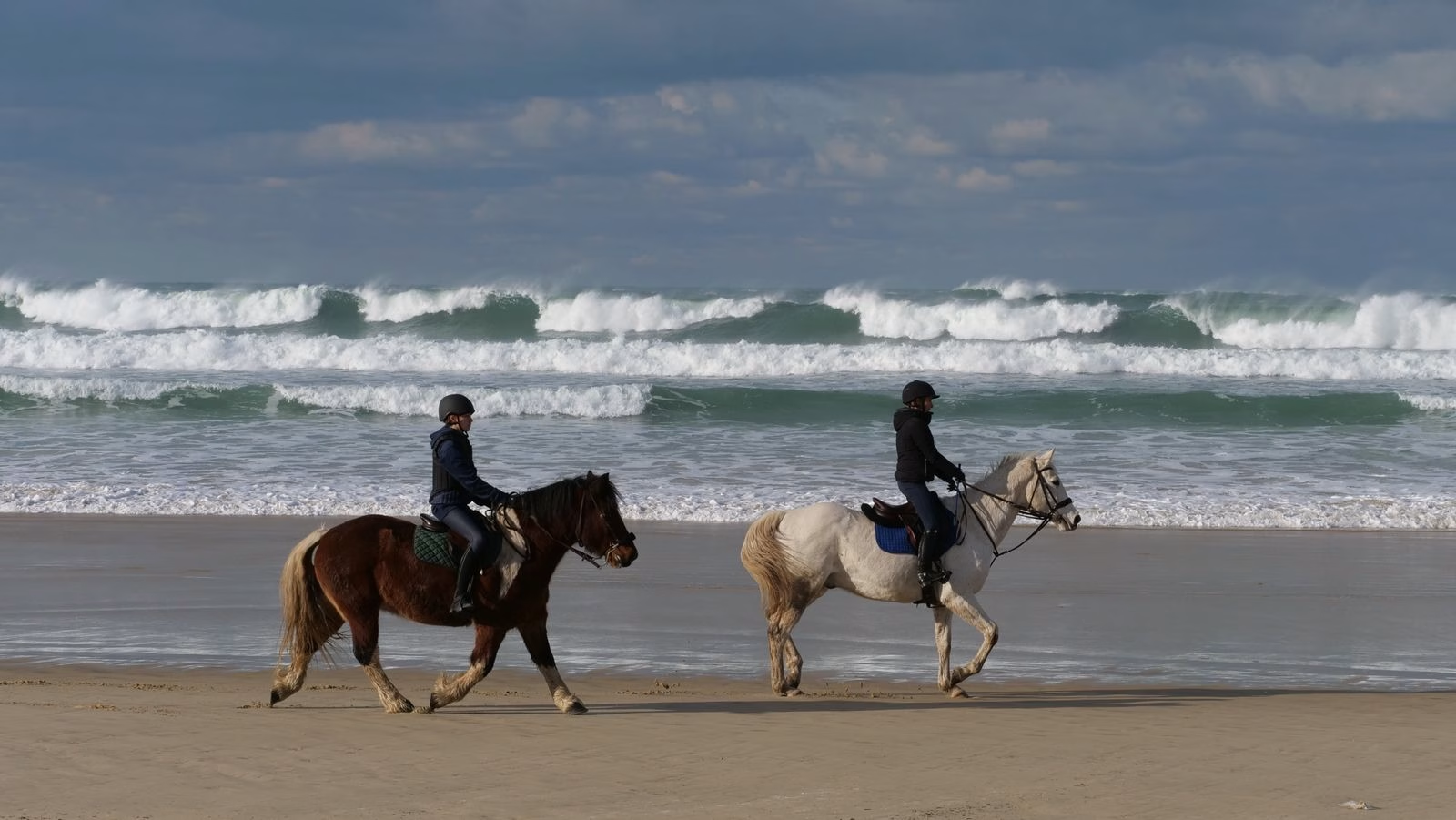
The coast is the other draw. The British Horse Society lists Amroth, Manorbier, Freshwater East, Whitesands and Newport Sands as beaches where you can ride the foreshore. The National Park Authority says nowhere in the park is more than ten miles from the sea.
The national park is the only one in the UK that exists mainly because of its coastline, and it has 186 miles of coast path. You will not ride most of that path, as the next section explains.
Rights and rules
The rules for riding in Pembrokeshire
You may ride on bridleways and byways, and not on footpaths. The Pembrokeshire Coast National Park Authority marks bridleways with blue arrows and byways with red. Footpaths carry yellow arrows and are for walkers only.
Bridleways make up about 20 per cent of the park's network of more than 800 km of public rights of way. Most paths are closed to you. Byways, with red arrows, are open to all traffic but mainly used by walkers and riders. Pembrokeshire County Council keeps the Definitive Map, which is conclusive proof of whether a route exists and what status it has.
The Pembrokeshire Coast Path is a different case. The Authority says that in most places you cannot ride it, because the path is only available to people on foot and nearly all of it is public footpath rather than bridleway. It names the bridleway section between Stack Rocks and St Govan's as an exception.
The Authority also has byelaws for the roughly two per cent of the park that it owns or leases. One says no person may ride or drive a horse in a race, or so as to cause danger or annoyance to others, on that land. County Council byelaws may apply elsewhere.
Beach riding
Beaches in Pembrokeshire
Yes on several beaches, but some are closed to riders at set times in summer, so you need to check the beach and the date before you go.
The British Horse Society says the foreshore at Amroth, Manorbier, Freshwater East, Whitesands and Newport Sands can be ridden, subject to there being lawful access to it. In the summer season those beaches are very busy, and the Society advises you to ride in the early mornings or evenings.
Between Amroth and Giltar Point, which takes in Saundersfoot and Tenby, the Society lists a restriction. You may not ride between 10 am and 7 pm from 1 May to 30 September. A local news report on the byelaw for Amroth and Wiseman's Bridge gives 1 June to 30 September. It says the byelaw has applied since an amendment in 1960. Hand-led ponies and donkeys for children's rides are excluded.
The two sources give different start dates, so ask Pembrokeshire County Council before you plan a beach ride in May. On any beach, check the tide times, avoid soft sand and estuary mud, remove droppings and keep to a walk near people and dogs.
Rider level
Which riders Pembrokeshire suits
Pembrokeshire suits novice to experienced riders, and the beaches ask more of you in summer than the hills do, so choose your beach with care.
Novice
Confident rider
Experienced rider
A horse new to beaches in high summer
The hacks on the Preseli moorland are short enough for a novice, and the valleys and woods give experienced riders longer days. A horse that has not seen the sea behaves differently on sand, so match the beach to your horse and ride the first day short.
When to go
When is the best time to ride in Pembrokeshire?
May to September is the window we suggest for the hills. No public body sets a riding season, so the points below are what the sources say.
The beaches are the part where timing counts. The beach byelaws bar horses from some sands between 10 am and 7 pm during the summer months. The British Horse Society advises riding at the start or end of the day when beaches are very busy.
That makes the edges of the day, and the months outside the byelaw dates, the easier times for sand. Confirm the dates with the County Council. The hills have no such limit, because you can use a bridleway all year.
Your own horse
Can you take your own horse to Pembrokeshire on holiday?
Yes, and the first things to settle are where your horse stays, where the lorry parks and which beach you want to ride.
We keep three horses at Noonvares Farm. We check the same list for our own: stabling or turnout, grazing, a way in for the lorry, and a route the horse can manage. The Society warns that beach car parks can have height barriers that stop a trailer, so check the parking before you set out.
The Welsh Government says every horse in Wales needs a microchip and a valid passport. You must keep the passport with the horse at all times, except in an emergency vet move. Check that your insurance covers riding away from home.
If your horse is new to the sea, walk the beach at low tide first to find soft sand, holes and rocks. Ride towards the water at an angle rather than head on, as the Society advises. A vet decides for an individual horse, so ask yours about a long drive west.
Common questions
Questions about horse riding in Pembrokeshire
Can you ride along the Pembrokeshire Coast Path?
Not in most places. The National Park Authority says nearly all of the path is public footpath, open only to people on foot. It names the bridleway section between Stack Rocks and St Govan's as an exception. Plan coastal rides on bridleways and beaches instead.
What are the colours of the waymarks?
Yellow arrows mark footpaths, which are for walkers only. Blue arrows mark bridleways, used by walkers, cyclists and riders. Red arrows mark byways, which are open to all traffic but mainly used by walkers and riders.
Which beaches are closed to horses in summer?
The British Horse Society lists the stretch from Amroth to Giltar Point, including Saundersfoot and Tenby, as closed to riders from 10 am to 7 pm. A local report on Amroth and Wiseman's Bridge gives a 1 June to 30 September restriction. Ask the County Council for current dates.
Can children's pony rides use a restricted beach?
A local news report says the Amroth and Wiseman's Bridge byelaw excludes hand-led ponies and donkeys used for children's rides. It bars other horses from the sands between 10 am and 7 pm. Check the wording with Pembrokeshire County Council.
Who keeps the record of public rights of way?
Pembrokeshire County Council keeps the Definitive Map. The National Park Authority describes it as the register of public rights of way and conclusive proof of a route's status. Ordnance Survey maps help, but the Definitive Map decides.
Does the National Park Authority restrict riding on its own land?
Yes, in one respect. Its byelaws cover the land it owns or leases, about two per cent of the park. They say no person may ride or drive a horse in a race, or so as to cause danger or annoyance to others.
Where to go next
Where next
Ride in Pembrokeshire
Tell us your dates and your level, and whether the horse is local or your own, and we will point you to the right ride.