
Horse riding · England
Horse Riding New Forest Rules and Routes
New Forest riding follows gravel tracks and open heath across the Crown Lands of Hampshire. Forestry England asks for no riding permit, but ponies, cattle and cyclists share the forest, and wet ground and nesting birds shape where you ride.
At a glance
New Forest riding in brief
- AccessOpen access on the Crown Lands; no Forestry England riding permit needed
- TerrainMature woods, streams and open heathland, with gravel tracks
- Riding level
Beginners on a guided ride to confident riders on their own horse - Where to rideThree suggested rides: Highland Water Inclosure, Woodgreen and Castle Hill, Slufters and Ocknell Plain
- Wet groundUse gravel tracks when the ground is wet and while ground-nesting birds breed
- Sharing the forestPonies, cattle and other livestock roam free all year; cyclists and walkers use the tracks
- Stay with your horseMany car parks allow you to unbox; check the car park before you travel
Where to ride
Where to ride in the New Forest
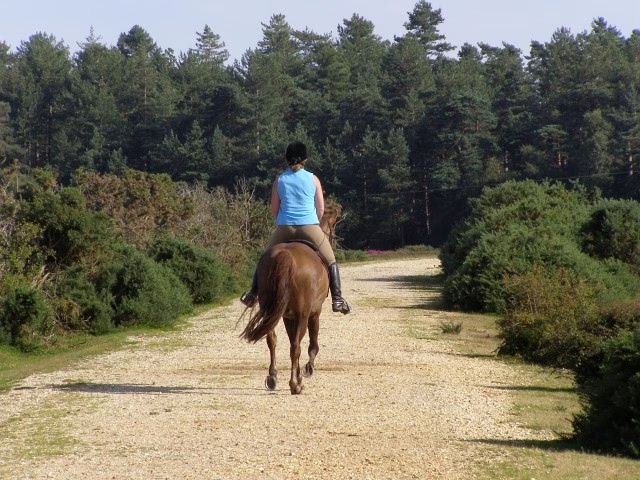
You can ride on the gravel tracks, woods and open heathland of the New Forest Crown Lands in Hampshire, which Forestry England describes as open access for riders.
Forestry England suggests three rides on its horse riding page. The first is a loop through Highland Water Inclosure, which starts at Millyford Bridge car park and takes in Mogshade, Andrews Mare and Acres Down before it returns to the start.
The second covers Woodgreen and Castle Hill Inclosures, which it recommends for autumn and winter. It advises horseboxes to park at Ashley Walk or Godshill Cricket car park. The third starts at Jamesmoor Pond car park, runs south towards Slufters Inclosure and climbs to the top of Ocknell Plain, where the heathland views open out on the way back.
Forestry England adds that many New Forest car parks allow you to unbox. It does not give height barriers or space for a larger lorry, so look at the car park or ring ahead before you travel.
Rights and rules
New Forest riding rules and code
The rules for riding in the New Forest come from Forestry England and from a riding code that the Verderers, the British Horse Society and the Forestry Commission endorse. Local byelaws apply as well.
The riding code asks you to ride slowly, because fast riding damages the ground and soft or wet ground is especially fragile. Stay on the tracks when the ground is soft, do not widen a track or make a new one, keep off areas that have been reseeded and do not build jumps. Land managers may close a route that has eroded.
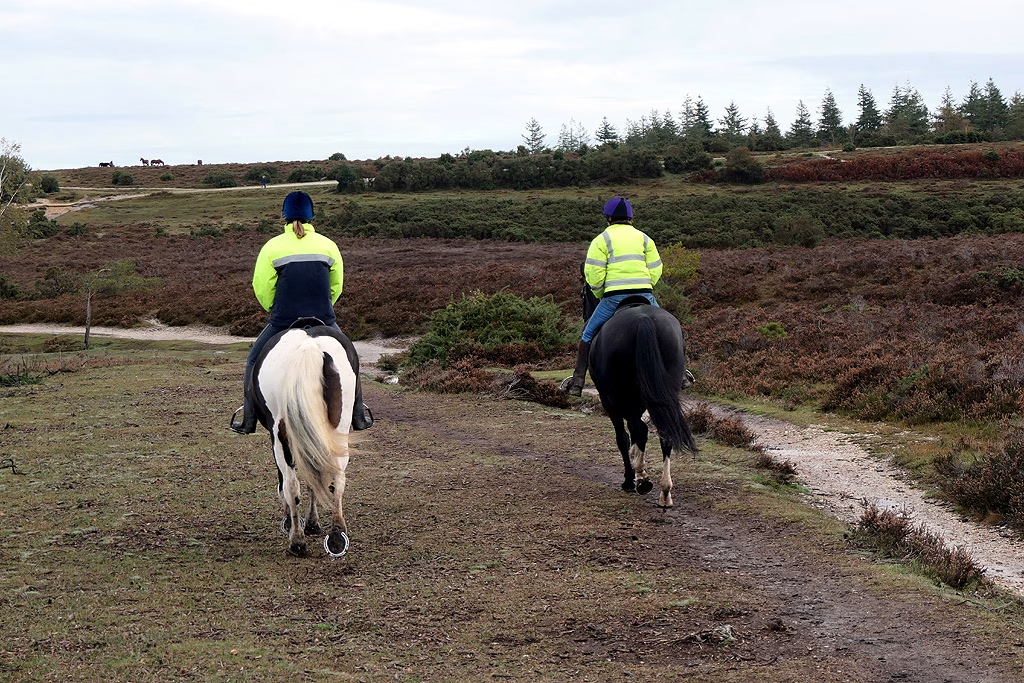
The code also asks you to ride no more than two abreast, and to keep groups on the road to eight horses or fewer. Slow down and call out a warning when you come up behind other people, since a horse that approaches quickly can intimidate them.
When you leave Forestry England land, use the bridleways. On private land, Forestry England says that riders must keep to Public Rights of Way, which appear on Ordnance Survey maps and are marked by fingerposts, blue arrows or blue dots. Organised riding events need permission from Forestry England.
Permits
Is a riding permit needed in the New Forest?
No, you do not need a Forestry England riding permit to ride in the New Forest. Forestry England asks you to follow every warning sign and the advice on it.
A permit does apply to driving. Forestry England says that you need a New Forest driving permit to drive a pony and cart on its land.
Rules on other land can differ from the Crown Lands, so check the permission for any private ground before you ride across it.
Rider level
Riding the New Forest as a beginner or a confident rider
The New Forest suits a wide range of riders, because the gravel tracks are easy to follow and the pace is set by the ground rather than by the route.
It suits you if
- Beginners who book a guided ride with a local riding centre
- Confident riders who like gravel tracks and open heath
- Riders who bring a horse that is calm around ponies, cattle and cyclists
It is not for you if
- Riders who want to canter freely across soft ground in wet weather
- Riders on a horse that spooks at free-roaming animals or bikes
- Riders who plan to ride across footbridges or off the tracks in nesting season
A rider new to the forest is usually best served by a guided ride from a licensed riding centre nearby, which matches you to a horse that knows the tracks. Ask about the length of the ride, the experience of the horses and the weight limit before you book. Limits vary by centre, so we leave a single figure out.
Confident riders who bring their own horse can use the open forest without a guide, as long as they follow the code and carry a map. Your horse will meet free-roaming ponies, cattle and cyclists, so it helps if it is settled around them.
Your own horse
Can you bring your own horse to the New Forest?
Yes, you can bring your own horse to the New Forest. Open access means there is no riding permit to buy, so the main things to plan are where the lorry will stand and where your horse will sleep.
Forestry England says that many car parks allow you to unbox, and it names Millyford Bridge, Ashley Walk, Godshill Cricket and Jamesmoor Pond for its three suggested rides. We found no published figures for stabling or grazing near the forest, so ask a local yard or livery directly before you commit.
GOV.UK says that you must keep a valid horse passport with your animal at all times, including when you move it.
Taffy, a Welsh cob, Jasmine, a Shetland pony, and Polly, a moorland pony, live on our own land at Noonvares Farm near Hayle in Cornwall. For our own horses we check where the stable or field is, how the fencing looks, where the lorry will stand and what the first mile from the gate is like. A vet decides for an individual horse, so find out the local equine vet before you set off.
Wildlife and ground
Ponies, nesting birds and footbridges in the New Forest
Ponies, cattle and other livestock graze the New Forest freely all year, so you will meet them on the tracks. Forestry England asks you to keep a safe distance and follow the signs.
Forestry England asks riders to use gravel tracks during the ground-nesting bird season, which it gives as late March to the end of August. The riding code gives a shorter breeding season of 1 March to 31 July and asks riders to keep to tracks in that period. We follow both bodies by naming each, and a rider who keeps to gravel tracks from March to August meets both.
About 100 footbridges cross the streams of the Forest. Forestry England says that they are for pedestrians, that none of them is on a public bridleway, and that horses should avoid them because of weight limits, narrow widths, low handrails and steep approaches. Use another route or an adjacent ford if it is safe.
Common questions
New Forest riding questions
Which routes does Forestry England suggest for riders?
Forestry England suggests a loop through Highland Water Inclosure from Millyford Bridge car park, a ride through Woodgreen and Castle Hill Inclosures that it recommends for autumn and winter, and a ride from Jamesmoor Pond car park towards Slufters Inclosure and Ocknell Plain.
Can you ride across the footbridges?
No. Forestry England says that the footbridges are for pedestrians and that they are not suitable for horses. It asks riders to take another route or an adjacent ford if that is safe.
Can you gallop across the open forest?
The riding code asks riders to go slowly, because fast riding damages the ground, especially when it is soft or wet. It also asks you to slow down and call out when you approach other people.
How many horses can ride together?
The riding code asks you to ride no more than two abreast. On the road, it limits a group to eight horses.
Can you ride on private land next to the forest?
Only on Public Rights of Way. Forestry England says that riders on private land must keep to them, and that Ordnance Survey maps show them with fingerposts, blue arrows or blue dots.
Do you need a permit to drive a pony and cart?
Yes. Forestry England says that you need a New Forest driving permit to drive a pony and cart on its land, although no riding permit is needed to ride.
Where to go next
Where next
Ride in the New Forest
Tell us your dates and your level, and we will point you towards the right ride, whether you hire a horse locally or bring your own.
Photographs: A rider on a gravel track near King's Copse Inclosure by Jim Champion, CC BY-SA 2.0; Riders on a heathland track at Dibden Bottom by John Lucas, CC BY-SA 2.0, via Wikimedia Commons.