
Horse holidays abroad · Iceland
Iceland Horse Riding: Highland Trails, Autumn Round-Ups and the Tölt
Iceland horse riding runs as highland trails across the interior and farm-based rides in the north and west, on trips of four to seven nights.
- Best monthsJun to Sep
- Level
Confident to expert - Typical trip4 to 7 nights
- Price guide
Higher
At a glance
What does a riding holiday in Iceland involve?
- Best monthsJune to August for highland trails; September for the round-ups
- Riding level
Intermediate to experienced, comfortable at all paces including a fast tölt - Hours in the saddle4 to 8 hours a day, 15 to 45km
- Typical trip4 to 7 nights, with 4 to 6 riding days
- Weight limit110kg on most rides; 120kg on one highland route
- Group sizeUp to 18 or 20 riders on the highland trails
- HorsesIcelandic horses only, small, sturdy and gaited
- TackFlat-seated English-style saddles and simple snaffle bridles
- AccommodationFarms and guesthouses; dormitory mountain cabins in the highlands
- Price guide
Higher for this kind of holiday, per person, before flights
The riding
What is horse riding in Iceland like?
Horse riding in Iceland is either a highland trail across the empty interior or a shorter ride from a farm in the north or west.
Kjölur
Landmannalaugar
Snæfellsnes
The north
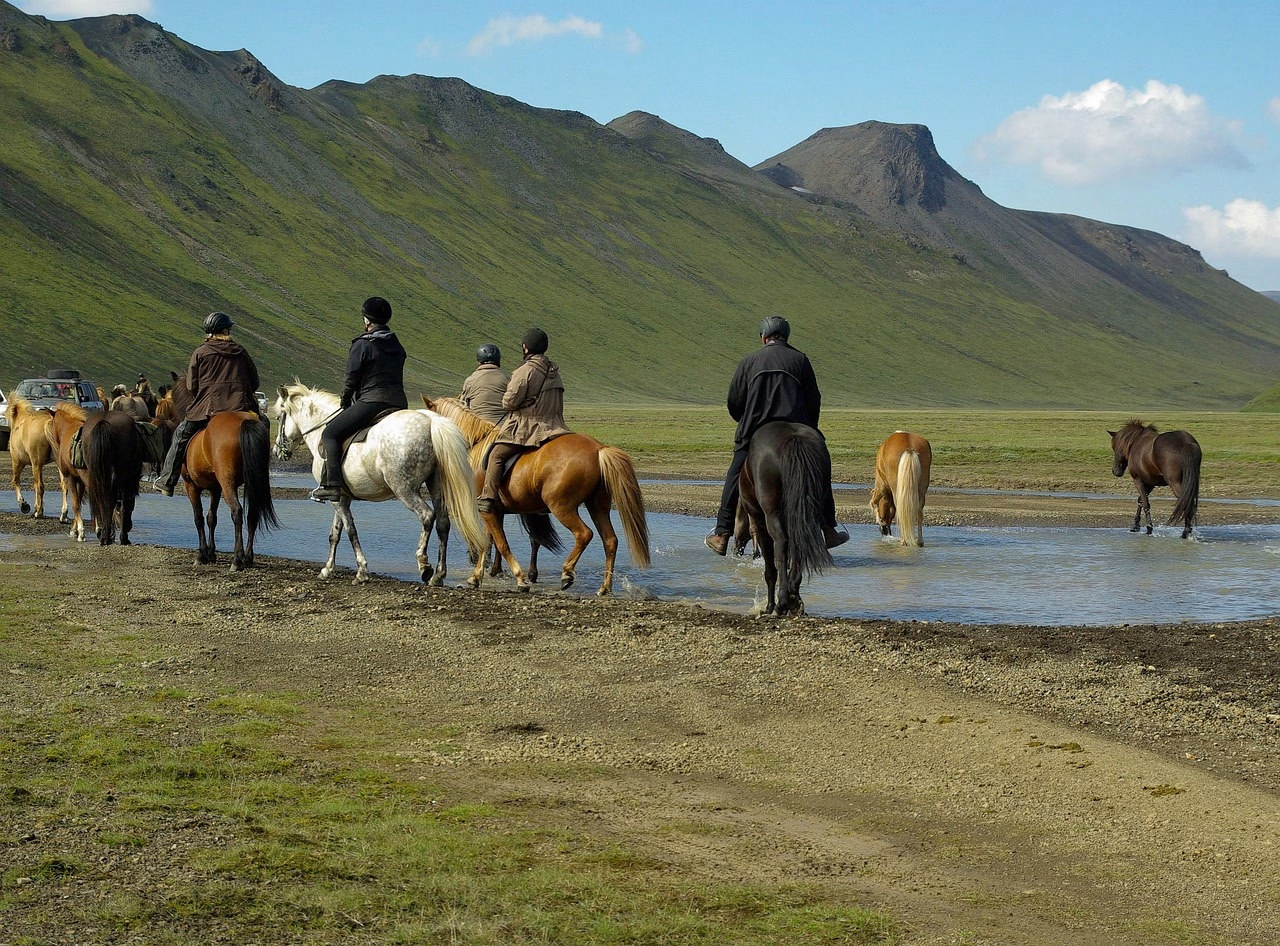
On the highland trails you ride between huts for six days, often with a loose herd of spare horses running ahead.
The ground is lava field, black sand, grass valley and river gravel, with glacial rivers to cross on horseback. A support vehicle carries your luggage from one night's stop to the next.
The farm rides are gentler, with a warm bed each night. In September they include the round-ups, when farmers bring sheep and horses down from the summer grazing.
When to go
When is the best time to ride in Iceland?
The best time to ride in Iceland is June to August, when the highland tracks are open and the days are long, with near constant light in late June.
- Jan
- Feb
- Mar
- Apr
- May
- Jun
- Jul
- Aug
- Sep
- Oct
- Nov
- Dec
The round-ups run from early September into October, and are ridden from farms in the north. Some farms also run short rides in winter, from October to March, when the northern lights can be seen.
Late autumn and early spring are muddy while the snow melts, so few multi-day trails run then. Weather in the highlands changes fast even in July, and you need full waterproofs every day.
Your level
What riding level do you need for Iceland?
You need to be a good intermediate or experienced rider for the highland trails, confident at all paces over rough ground, including a fast tölt.
Novice
Intermediate
Experienced
It suits you if
- You are fit enough to ride most of the day and then help with the horses
- You are happy sharing a dormitory hut and bringing your own sleeping bag
- You want wide empty country and river crossings
It is not for you if
- You weigh more than 110kg in riding clothes
- You want a private room and bathroom every night
- You dislike cold, wind and rain in summer
You also need the stamina for up to eight hours a day on consecutive days. The round-ups ask for good fitness and basic horsemanship, as some days run long. The weight limit is 110kg on most rides, with one Kjölur route taking riders up to 120kg, and hard hats are compulsory.
The horses
What are the horses and tack like in Iceland?
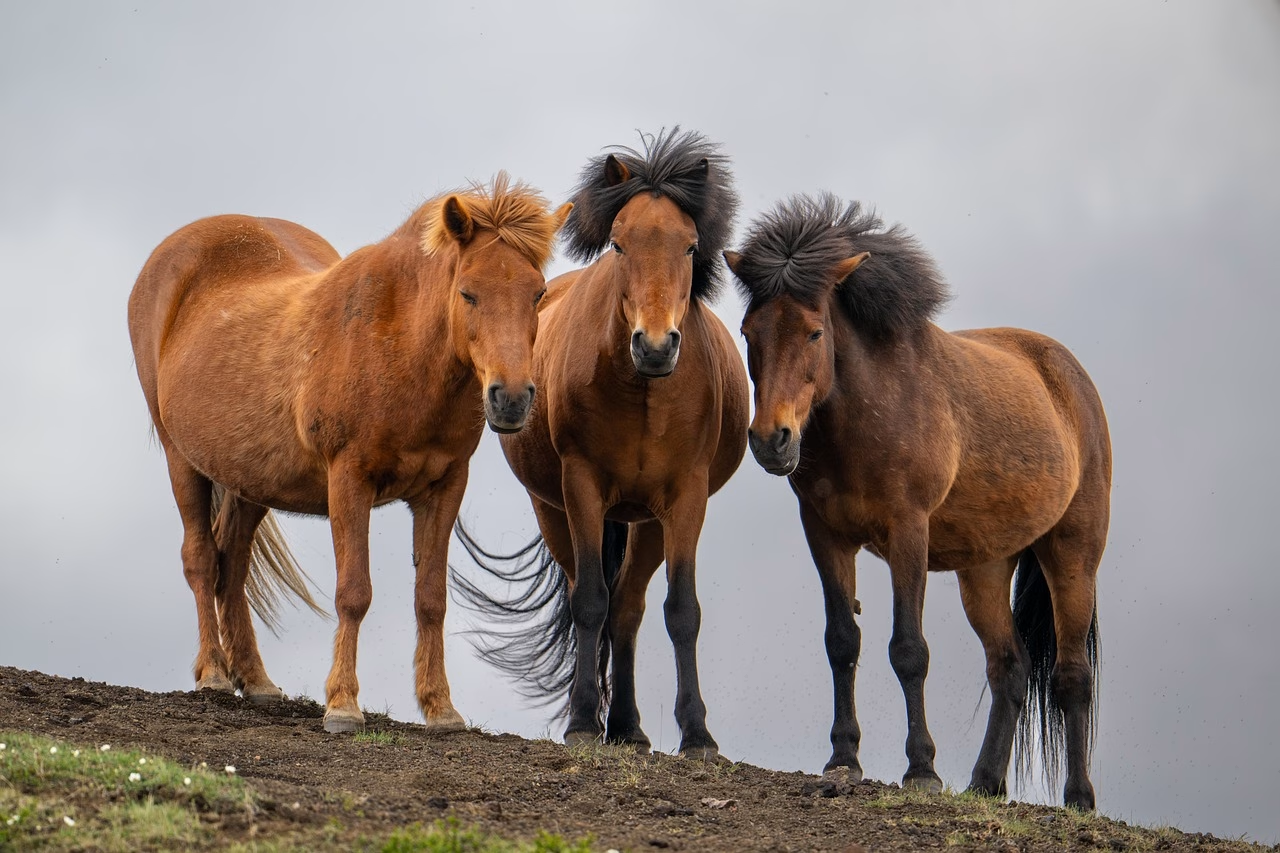
Every horse you ride in Iceland is an Icelandic horse, because the country banned the import of horses centuries ago. They are small and sturdy but are never called ponies, and they carry adult riders over rough ground with ease.
The saddles are flat in the seat, close to a dressage saddle, with a simple snaffle bridle.
Where you stay
Where do you stay on a riding holiday in Iceland?
You stay in farm guesthouses on the farm rides, and in mountain huts on the highland trails. The huts are basic, with bunk beds in shared rooms and limited showers, and you bring a sleeping bag.
Most highland trails begin and end with a night in a guesthouse. On the round-ups you sleep at the same farm each night, with shared bathrooms.
The cost
How much does a riding holiday in Iceland cost?
A riding holiday in Iceland is a higher price for a four-night round-up, which is what a typical riding week costs. It stays a higher price for a week on a highland trail, before flights.
Laufskálarétt horse round-up
Price guide
Higher
The Kjölur Trail
Price guide
Higher
Kjölur Trail, low season
Price guide
Higher
Landmannalaugar
Price guide
Higher
Rides we can arrange
Which rides do we recommend in Iceland?
We know horses, and we know the people who run these rides. Tell us how you ride and where you want to go, and we will put you with the right one.
Kjölur Trail
Six riding days across the middle of Iceland, past extinct volcanoes and glacier lakes, crossing glacial rivers and passing Gullfoss. Around six or seven hours a day, sleeping in mountain cabins.
Kjölur Wilderness Adventure
The 180km Kjölur route through the uninhabited highlands, riding with herds of free-running horses. Farms, guesthouses and mountain huts, with a minimum age of 15.
Landmannalaugar Highland Trail
One of the highland trails, through the coloured hills of the southern highlands. English riding style, with a support vehicle carrying luggage between huts.
Horse Round-Up
Four days riding from a farm in the north to gather free-running horses from the hills and sort them at the communal corral, with September departures only.
Only here
What is the tölt?
The tölt is a smooth four-beat gait that the Icelandic horse has in addition to walk, trot and canter. It can be ridden slowly or at speed, and the rider sits still in the saddle without rising.
Some Icelandic horses also have flying pace, a fast lateral gait used over short distances, giving them five gaits in all. On the trails the tölt covers most of the ground, so you need to be comfortable sitting to it for long spells.
Common questions
Iceland riding questions
Can beginners go horse riding in Iceland?
Beginners can take day rides from farms, and some rides can be tailor-made for novices. The multi-day highland trails are for intermediate and experienced riders.
What is the weight limit for horse riding in Iceland?
Most rides set 110kg in riding clothes. One Kjölur route accepts riders up to 120kg.
Are Icelandic horses ponies?
They are small, but in Iceland they are always called horses. They carry adult riders over rough ground and long days without difficulty.
Can you ride in Iceland in winter?
Yes, on short farm-based rides of about three nights, between October and March, though the highland trails close for the winter.
What is a round-up in Iceland?
Each September farmers ride into the hills to bring down the sheep and horses that have grazed there all summer. Visiting riders help drive the herd to a communal corral, where the animals are sorted by owner.
What should you pack for riding in Iceland?
Full waterproofs, warm layers and a sleeping bag for the mountain huts. Hard hats are compulsory on every ride.
Where to go next
Nearby, and next
Tell us how you ride
Tell us your level, your dates and the country you have in mind, and we will point you to the ride that fits.