
Horse trekking · UK
Horse Trekking UK Rides and Holidays
Horse trekking in the UK means a guided ride at walk along trails and bridleways, from a single hour at a local centre to a trekking holiday of several days, and this is how to choose one that suits your riding.
At a glance
The short answer
- Price guide
Low to premium, per person, before flights - Riding level
Beginner to experienced, depending on the ride - Typical trekOne hour to a full day; some holidays run for several days
- PaceMostly walk, with trot and canter on longer rides for confident riders
- Group sizeOften small groups; one tourist board listing gives one to sixteen riders
- Best monthsMany centres ride all year, so ask each centre for its season
- Where to trekWales, Dartmoor, Exmoor, the North York Moors, the Peak District and the Highlands
What it is
What is horse trekking in the UK?
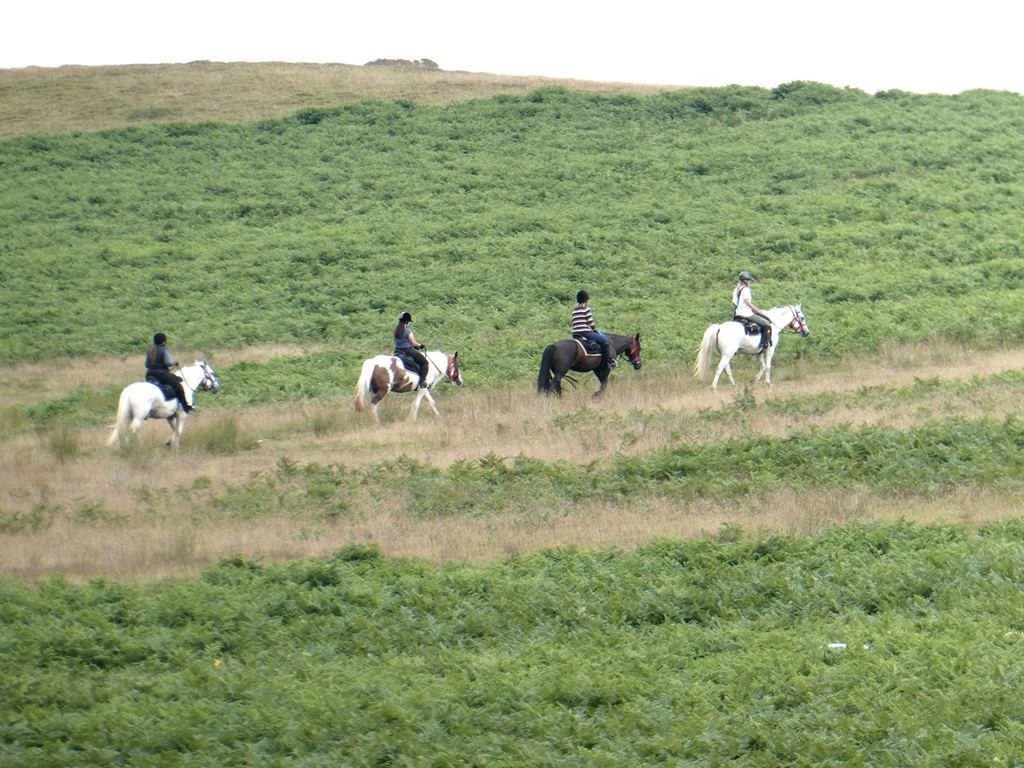
Horse trekking in the UK is a guided ride at walk, with a little trot where the ground allows, along trails and bridleways. A guide leads the group out on horses that know the route and brings everyone home again.
It differs from a lesson, which is taught in a school or paddock to improve your riding. It also differs from hacking, which usually means riding a horse out along tracks and lanes in a smaller party. The landscape is the reason for going, and the guide takes care of the route, the pace and the choice of horse.
Pony trekking is the older name for the same idea, and many centres still use it. Horseback trekking and horse riding treks are other phrases you will meet in listings, and all of them cover outings from one hour to a holiday of several days.
How long
A trekking ride, start to finish
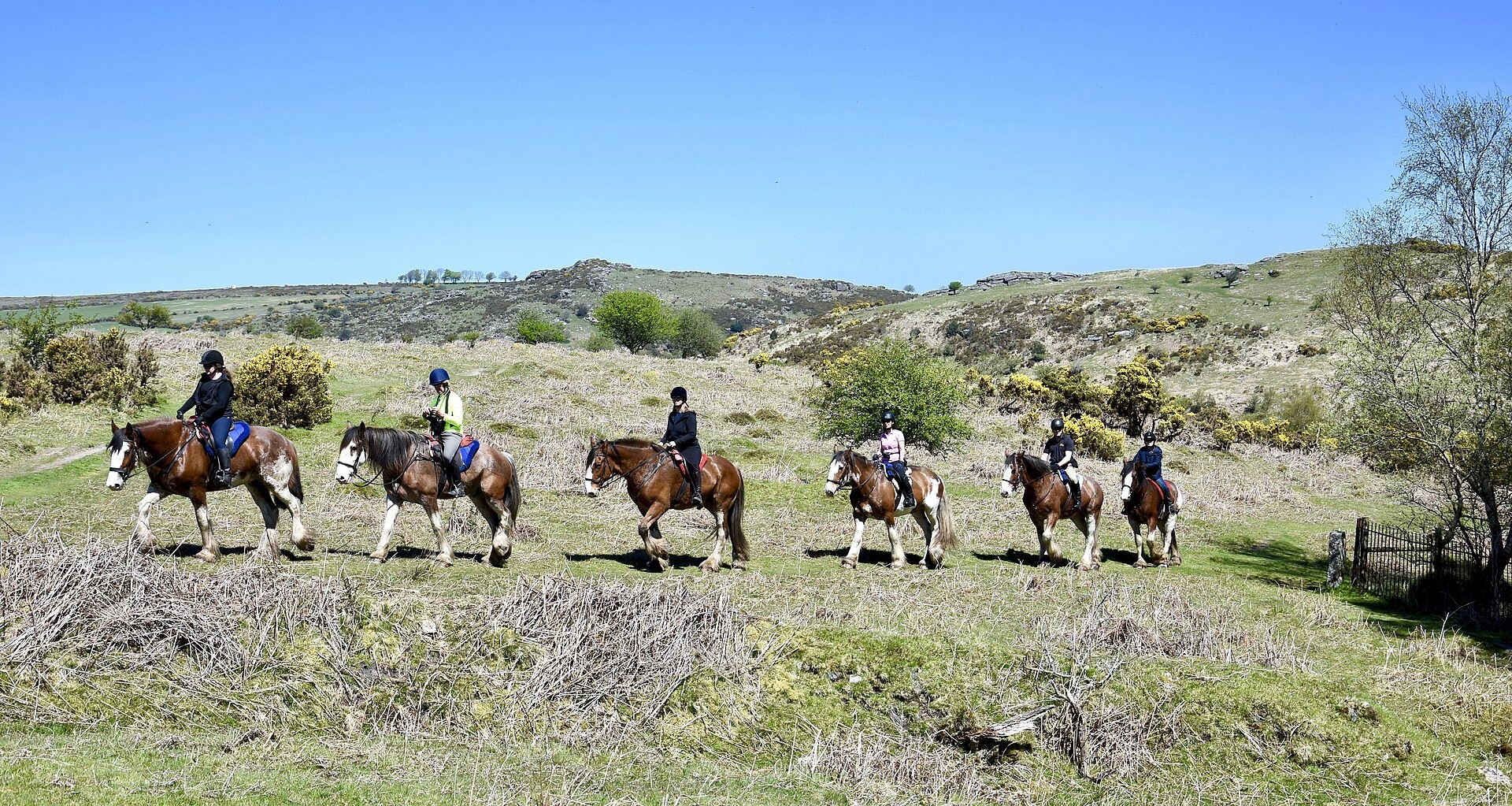
A trekking ride lasts from one hour to a full day at most centres. Some operators link several days into a trekking holiday with nights in a hotel or lodge.
One Powys centre in Bannau Brycheiniog lists rides of one hour, an hour and a half and two hours. Its day trek is two rides of two hours with a midday break back at the stables. One Highlands listing runs from half an hour to all day, so you can match the length to your stamina.
Longer rides ask for more. At one Derbyshire centre the one-hour ride takes complete beginners, while the two and a half hour ride asks that you can walk, trot and canter.
Multi-day trekking is a different booking. One Dartmoor package offered two full riding days across three nights and was aimed at confident riders. A week in the Scottish Borders rode between two and six hours a day and catered for all abilities.
Who it suits
Can beginners go horse trekking?
Yes, many centres welcome complete beginners on their shorter rides. The longer hill and forest rides usually ask for some previous riding.
It suits you if
- You want to see hills, moors or forest from the saddle at a walking pace with a guide in front
- You are new to riding and want a short first ride on a horse chosen for you
- You ride already and want a day or several days of trail riding without owning a horse
It is not for you if
- You want a riding lesson that improves your technique in a school or paddock
- You are a complete beginner and want a long, fast ride, because those are for experienced riders
- You weigh more than the limit set by the centre you have chosen
The Powys centre calls its one-hour ride ideal for beginners. A centre near Caernarfon in Snowdonia says complete beginners and competent riders are equally welcome. The Pembrokeshire listing needs no experience on its one-hour route, but its hill treks do.
Weight limits are set by each centre, so ask when you book. The Pembrokeshire listing publishes a maximum of sixteen stone, and several other centres publish none at all.
On Dartmoor, the national park visitor pages point beginners to the south-east, which has a good number of easy rides.
Where to go
Where to go horse trekking in the UK
Good trekking country in the UK is open upland with a network of bridleways. Wales, the English moors, the Peak District and the Scottish Highlands each offer it in a different form.
Powys and Bannau Brycheiniog
Gwynedd and Snowdonia
Pembrokeshire
Dartmoor
Exmoor
North York Moors
Peak District
Scottish Highlands
Our county pages cover the areas in more detail: Powys, Gwynedd, Pembrokeshire, Dartmoor, North Yorkshire, Derbyshire and the Highlands. There are wider guides to Wales and Scotland too.
Scotland works differently from England and Wales. The Land Reform (Scotland) Act gives riders a right of access to most land, provided they behave responsibly. The official guidance says this covers some commercial activities such as pony trekking. It asks you to avoid regular use of soft paths in very wet weather. Organised rides of about twelve or more riders, and riding businesses, should consult land managers.
Beach riding is set locally, beach by beach, so check with the centre or the council. The North York Moors national park lists Saltburn and Sandsend beaches as open to riders and asks you to check tide times. For the far south-west, see horse riding in Cornwall.
Cost
How much does horse trekking cost?
Horse trekking costs a low price for a single ride of an hour or a day, a higher price for a short break with accommodation and a premium price for a week of trail riding, per person and before travel.
Centres publish their own rates and change them with the season, so the table gives starting points from pages read today. Packages with nights away include a bed and meals as well as the riding.
Ask what the quoted price includes and whether a same-day booking adds a surcharge, because one Derbyshire centre charges a small extra for that.
One-hour trek
Price guide
Low
Half-day trek
Price guide
Low
Full-day trek
Price guide
Low
Short trail break with accommodation
Price guide
Higher
Week-long trail with accommodation
Price guide
Premium
What to ask
What to ask a trekking centre
Ask whether the centre is approved by the British Horse Society or the Association of British Riding Schools, what hat it provides, what its weight limit is and how many riders go out together.
Approval
Licence
Insurance
Hat standard
Weight limit
Group size
Approval is a sign of checked standards and sits alongside the legal licence. The British Horse Society gives a first-time applicant an initial inspection and then announced visits every other year. Inspectors look at horse care, coaching and safety. The Association of British Riding Schools asks approved establishments to follow a code of conduct and complete safeguarding training, and adds that riding establishments must also be licensed by their local authority.
The British Horse Society approvals hat guide accepts several standards, each with its own quality mark, including PAS 015 and VG1 01.040 with the Kitemark or Inspec IC mark. A good centre lends a correctly fitted hat, and you can check any hat of your own against that list.
You will usually be asked about your height, weight and riding history so that the centre can match you to a horse, and a straight answer gets you a better ride.
Seasons and booking
When to book and how to plan
Many centres ride all year, so the season matters less than the ground and the weather. Book ahead, because several centres ask for pre-booking.
One Highlands listing runs rides every day from January to December, and a Glen Affric listing says its rides run all year. A Derbyshire centre says pre-booking is essential. On Dartmoor, the Ministry of Defence uses the northern half for training, so check the government firing programme before you plan a route there.
Equine Escapes is a family farm in Cornwall with three horses of its own: Taffy, a Welsh cob, Jasmine, a Shetland, and Polly, a moorland pony. We point riders towards good riding rather than running treks ourselves. Tell us your dates, your level and the region you have in mind, and we will help you shape the plan.
Put the questions in the table above to each licensed trekking centre on your shortlist, compare the answers and book the ride that matches your riding.
Common questions
Questions about horse trekking
Is horse trekking the same as pony trekking?
Pony trekking is the older name for the same kind of guided ride, and many centres still use it. The animals are often full-size horses or cobs, so the name tells you little about the horse. Check the length of the ride and the level it asks for, because those tell you far more than the label does.
Do you need to book a trekking ride in advance?
Several centres ask you to. One Derbyshire page says pre-booking is essential and adds a small surcharge for same-day bookings, and a Snowdonia listing asks you to pre-book. Booking ahead also lets the centre match you to a suitable horse.
Can children go horse trekking?
Often, on the shortest rides. Listings read today give a minimum age of three or four for the shortest rides at centres in Pembrokeshire, Derbyshire and the Highlands, and the Pembrokeshire centre takes riders of all sizes and abilities. Ask each centre for its own age rule.
Is there a weight limit for horse trekking?
Each centre sets its own limit, and many listings do not publish one. A Pembrokeshire tourist board listing gives a maximum of sixteen stone. Ask when you book, because the answer decides which horse you are given and whether the ride goes ahead.
Can you ride in Scotland without asking permission?
Responsible riders have a right of access to most land and inland water in Scotland, and the guidance says this covers some commercial activities such as pony trekking. It excludes hunting and motorised vehicles, and organised rides of about twelve or more riders should consult land managers.
Do you need your own horse for a trekking holiday?
No, many centres supply the horse. The North York Moors national park lists four centres offering hacks for riders without their own horse, and the Dartmoor visitor pages say local stables can provide tuition and an experienced guide. A long ride such as the four-day North York Moors and Dales Ride suits riders with their own horses.
Where to go next
Where next
Plan a horse trek
Tell us when you would like to ride, how much riding you have done and which part of Britain you have in mind, and we will point you towards the right kind of trekking.
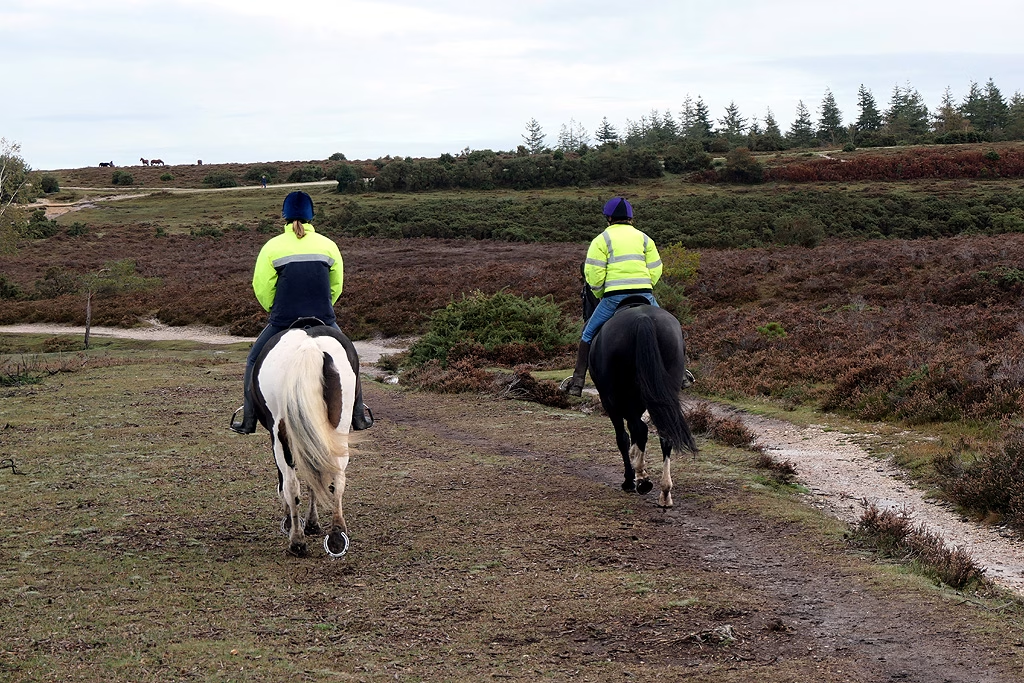
Photographs: Riders on Painscastle Hill, mid Wales by Oliver Dixon, CC BY-SA 2.0; A line of riders crossing open moor on Dartmoor by Dave_S. from Witney, England, CC BY 2.0; Two riders on the heath at Dibden Bottom in the New Forest by John Lucas, CC BY-SA 2.0, via Wikimedia Commons.