
Horse riding · UK beaches
Horse Riding on the Beach in the UK
You can ride horses on many UK beaches, but each council, landowner or nature body sets its own times, seasons and routes, so check the rules for your beach before you load the horsebox or book a ride.
At a glance
Beach riding in brief
- Riding level
Beginner to experienced, depending on the ride - Best monthsOctober to April carries the fewest limits
- Summer limitsMany beaches restrict riding from 1 May to 30 September
- Time windowsEarly morning and evening are the usual summer slots
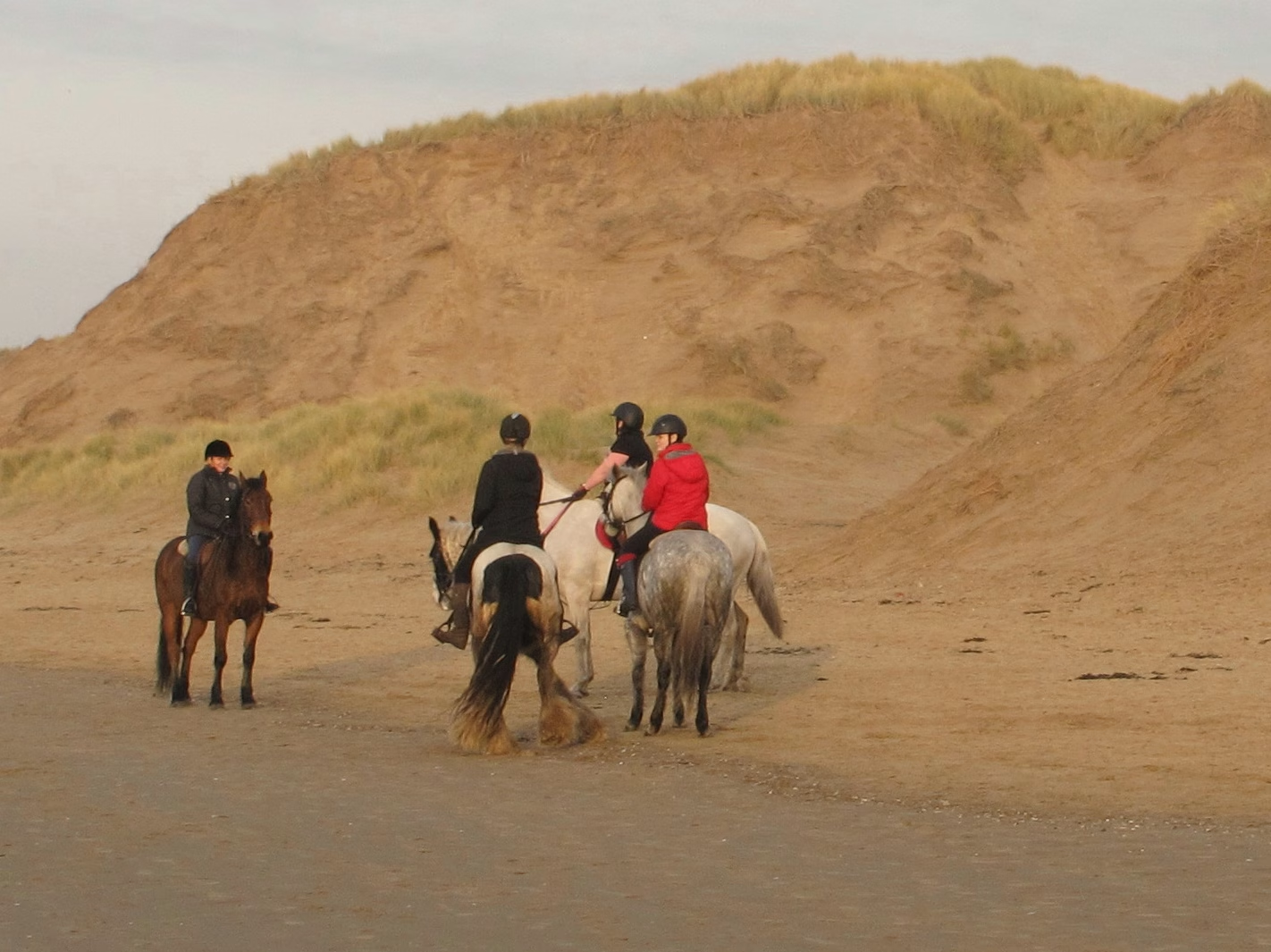
- TideFormby and Sefton ask riders to stay two hours clear of high tide
- PermitsStudland, Belhaven Bay and Newborough ask for one
- AccessLocal rules in England, Wales and Northern Ireland; access rights in Scotland
- Where to rideNorfolk, Dorset, Merseyside, Sussex, Lincolnshire and Northumberland
The basics
Where can you ride horses on the beach in the UK?
You can ride horses on beaches in all four nations of the UK, but only where the manager of the beach allows it. That manager is a council, landowner or conservation body, and it sets the terms.
The British Horse Society tells you to check first whether riding is permitted, because it may be limited by day, time or area and local byelaws may apply. That is why a beach that welcomes riders all winter can close to them in July.
Well-known riding beaches include Holkham in Norfolk, Studland in Dorset, Formby on Merseyside, Camber Sands in East Sussex and the long foreshore at Druridge Bay in Northumberland. Each runs on different conditions, and the table further down shows what each one asks of you.
Rules
The rules for beach riding
Councils, landowners and conservation bodies set the rules, so neighbouring beaches can ask different things of you as a rider.
In England and Wales that usually means a seashore byelaw, a permit scheme or conditions set by the landowner. North Norfolk District Council, for example, bans racing and any riding that causes danger or annoyance on its seashore, and sets no times or seasons.
Scotland works differently. Under the Land Reform (Scotland) Act access rights cover beaches and the coast, and riders need no prior permission if they behave responsibly. Groups of twelve or more should consult the land manager, and repeated schooling or custom gallops need the landowner's consent.
Some conditions sit on top of the beach rules. Sefton Council and Causeway Coast and Glens Borough Council expect you to carry liability insurance, and Holkham makes hi-vis compulsory.
Beach by beach
Summer restrictions by beach
Most limits apply in summer, and each authority below publishes its own version, so you can compare the beaches one by one.
Holkham, Norfolk
Studland, Dorset
Formby, Merseyside
Southport and Ainsdale, Merseyside
Camber Sands, East Sussex
Skegness to Sutton on Sea, Lincolnshire
Druridge Bay, Northumberland
Thanet, Kent
Isle of Wight
Torbay, Devon
Causeway Coast, Northern Ireland
Each entry gives the rule as the owner or council published it when last checked. Rules change, so read the beach's own page before you travel.
When to go
When is the best time to ride on the beach?
The best time is October to April, and early morning or evening in summer, because those are the periods with the fewest limits.
Summer windows are set locally. Camber Sands allows 7pm to 8.30am in its restricted area and Thanet allows before 9am and after 7pm. Holkham runs separate morning and afternoon slots that change with the season.
The tide matters in every month. Camber Sands allows riding only within two hours either side of low tide all year, while Formby and Sefton keep riders away from high water. Check tide tables for the day, and ask the beach's owner whether the closed periods have changed since you last looked.
Safety
Tides, sand and safety
Tides, soft sand and other beach users are the three things you need to plan for, and the British Horse Society gives clear advice on each.
Avoid high tide and any area the incoming tide can cut off. On an unfamiliar beach, walk the route at low tide and check the footing for soft sand, holes and debris before you trot or canter.
Walk past people, children and dogs, and do not pass others at speed. The society's older guidance adds that a dog may chase a horse that is moving faster than a walk.
Estuaries need extra care. The society calls quicksand and mud in some estuaries unpredictable and extremely dangerous, and says Morecambe Bay needs local knowledge. HM Coastguard advises checking tide times and the weather before you go out and avoiding estuary mud, where hidden fast channels can run.
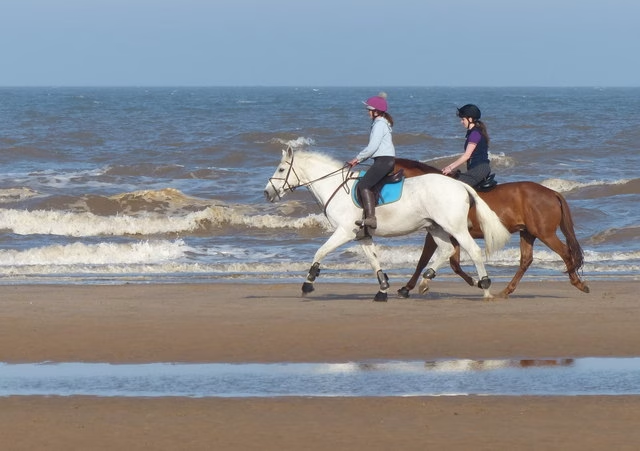
If you ride into the sea, enter at an angle and stay in water you can get back from, because horses have trouble turning when they swim. Rinse sand and salt from tack afterwards.
Your own horse
Can you take your own horse on the beach?
Yes, at many beaches, usually on conditions such as a permit, set hours or a set access route.
It suits you if
- Your horse is fit and settled in open spaces
- You are happy to plan around tide tables and permit rules
- You can ride the walk, trot and canter in company
It is not for you if
- You want to arrive and ride at midday in July
- Your horse has never met crowds, dogs or the sound of surf
Studland and Belhaven Bay in East Lothian ask for a permit. Newborough Forest on Anglesey needs one from Natural Resources Wales, and the beaches north of Mablethorpe need one from Natural England.
Access can be narrow. Formby lets riders in only by the Lifeboat Road dune path and East Devon bans horseboxes on its beaches. Holkham asks you to arrive in set windows and leave the car park by a set time.
Guided rides
Guided beach rides
A guided beach ride takes the rules and the tide timings off your hands, but the details differ from centre to centre.
Tide times
Pace
Riding level
Rider weight
No authority publishes standard ride lengths, gaits or group sizes, so ask each centre. One business on the Isle of Lewis lists year-round beach rides open to all abilities and ages. A Pembrokeshire tourist board page mentions beach gallops, so you will find everything from gentle walks to faster paces.
Some beaches regulate paid rides. Formby asks commercial groups for a National Trust licence, a risk assessment and public liability insurance, and East Lindsey bans hiring horses on its beaches for gain.
Nations
Wales, Scotland and Northern Ireland
Wales, Scotland and Northern Ireland all have beaches for riders, under different rules from England.
The Wales Coast Path lists Talacre, with nearly five miles of sand, as a place for riders. It adds Penmaenmawr, Morfa Conwy and Ragwen Point and states no rules for any of them. Newborough Forest on Anglesey needs a permit.
In Scotland, Belhaven Bay in East Lothian runs a voluntary permit scheme with a map. It asks riders to keep off the saltmarsh and not to gallop past other people.
In Northern Ireland, Causeway Coast and Glens applies its beach policy from 1 May to 30 September. Mid and East Antrim allows horses at Carnlough and Brown's Bay from 1 June to 31 August only before 11am and after 6pm. It does not allow them at Ballygally.
Common questions
Questions about beach riding
Can you gallop on a UK beach?
Sometimes, but many rules limit it. The National Trust allows no full gallop at Formby, and Sefton Council allows none on its Southport beach. The British Horse Society says never to pass other beach users at speed, so firm, empty sand and local permission come before any gallop.
Can you ride on the beach at high tide?
Rarely. The British Horse Society advises you to avoid high tide, and Formby and Sefton ask riders to stay two hours clear of it. Camber Sands goes further and allows riding only within two hours either side of low tide.
Do you need a permit to ride on the beach?
At some beaches. Studland asks for one from the National Trust and Belhaven Bay runs a permit scheme. Newborough Forest needs a Natural Resources Wales permit, and the beaches north of Mablethorpe need one from Natural England. Many others need no permit, only a time window.
Do you need insurance to ride on the beach?
Some authorities expect it. Sefton asks riders for liability insurance, Causeway Coast and Glens expects public liability cover, and Formby requires it from paid group rides. Check the beach's own page, and ask an equestrian insurer what your policy covers.
Is it safe to swim a horse in the sea?
The British Horse Society cautions that horses have trouble turning when they swim, and advises entering the water at an angle and staying where you can get back. Somerset Council asks riders to keep horses out of the water at Berrow and Brean.
Are horses banned from some beaches in summer?
Yes. Studland allows no horses from June to October. Torbay bars them from Seaside Award beaches between 1 May and 30 September, and East Lindsey keeps them off central beaches while a Blue Flag flies.
Where to go next
Where next
Plan a beach ride
Tell us when you would like to ride, how much riding you have done and which coast you have in mind, and we will point you towards the right kind of beach ride.
Photographs: Riders on the beach at Formby, Merseyside by David Hawgood, CC BY-SA 2.0; Two riders in the surf at Auburn Sands, East Yorkshire by Mat Fascione, CC BY-SA 2.0, via Wikimedia Commons.