
Horse riding · Scotland
Horse Riding Highlands and Great Glen
You ride Highland on glen tracks, forest roads and estate paths across hill country, under a legal right of responsible access. The ground is often wet and remote, so it suits confident riders.
At a glance
The short answer
- Best monthsMay to Sep
- Riding level
Confident to expert: steep, stony and boggy ground in places - TerrainGlens, forest roads, stony farm and estate tracks, open hill
- Where to rideThe Great Glen, Strathspey, Glen Affric and Kintail, Lochaber
- AccessRight of responsible access under the Land Reform (Scotland) Act
- Long-distance routeGreat Glen Way, 79 miles, Fort William to Inverness
- Stay with your horseCheck stabling or turnout, grazing and lorry parking before you book
Where to ride
Where to ride in Highland
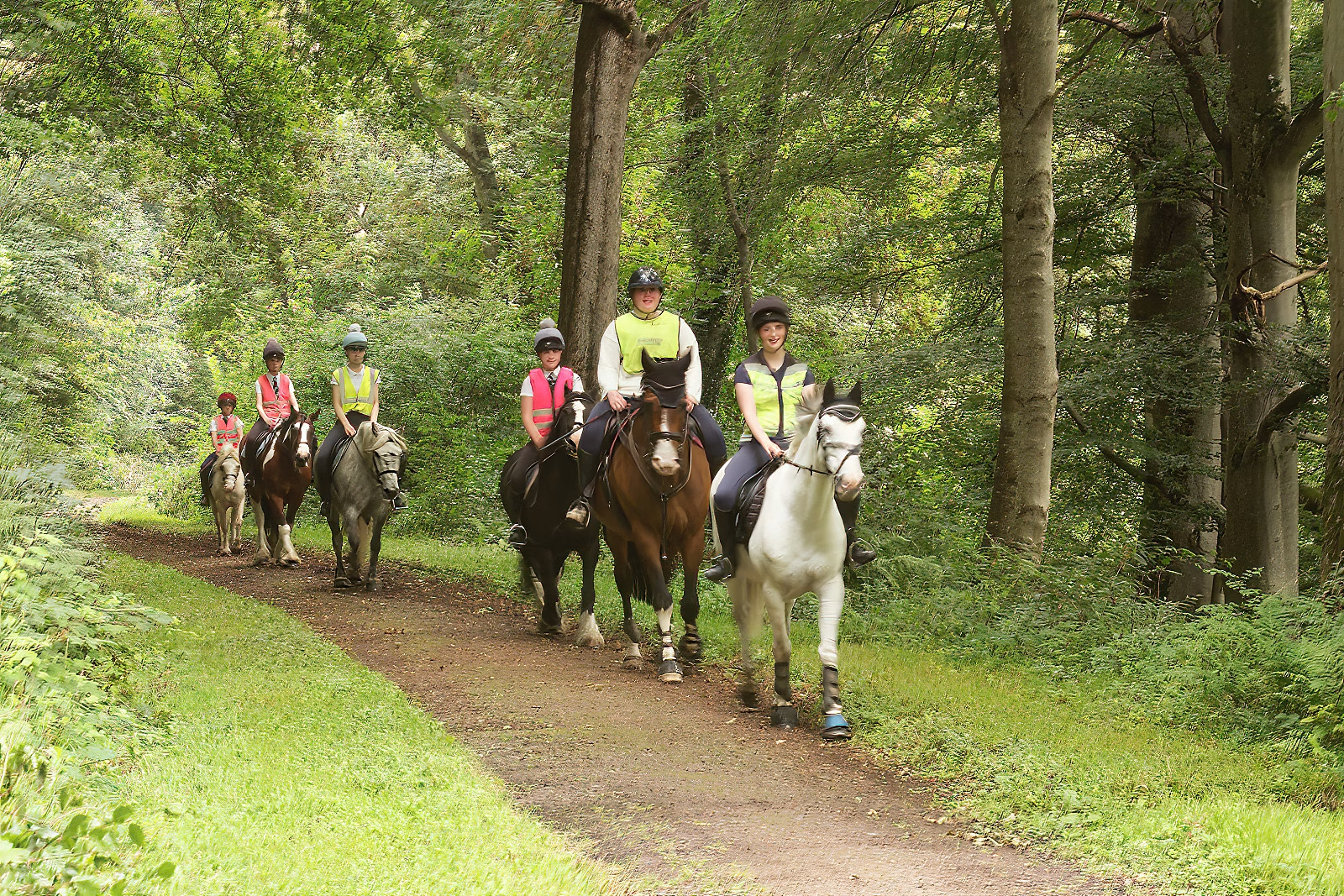
You can ride on forest roads, glen tracks and the paths of long-distance routes across Highland, from the Great Glen and Strathspey to the glens of the west coast.
The Cairngorms National Park reaches into Highland around Strathspey. The Park Authority says the right of responsible access there covers walking, cycling and horse riding on most land and inland water, so you may ride where the ground allows.
The Great Glen Way links Fort William and Inverness over 79 miles. The Affric Kintail Way crosses the hills for 44 miles from Morvich on the west coast to Drumnadrochit, where it meets the Great Glen Way. You can ride parts of them, as the long-distance section below explains.
Highland Council lists horse riding among the activities its core paths are meant for, and its website carries a map of them. You do not need a core path to ride, because access rights cover most land.
Forestry and Land Scotland says many of its forest roads and trails are ideal for horse riding. It marks the forests that suit riders with a horseshoe symbol on its website, so read the page for each forest before you load the horse, because we found no confirmation of riding at every Highland forest.
Rights and rules
The rules for riding in Highland
The rules are the Scottish ones: the Land Reform (Scotland) Act gives everyone a right of responsible access to most land, and the Scottish Outdoor Access Code says that access rights extend to horse riding.
The Code says riding on wide paths, tracks and well-drained ground causes few problems. If you leave the path in winter, it asks you to avoid wet, boggy or soft ground and not to churn up the surface.
Access rights do not apply to houses and gardens, or to land in which crops are growing. The Code asks you to keep to a walk when you pass through or near livestock and to stay out of fields with grazing horses or animals that might be a danger. You need permission for repetitive schooling, or for jumps and gallops, on someone else's land.
Stalking and shooting shape the autumn. The Scottish Outdoor Access Code website says most red deer stag stalking takes place between July and mid-October, although male deer stalking can now take place all year, and that hind stalking runs from 21 October to 15 February. Fewer routes are affected on Saturdays, and stalking does not usually take place on Sundays.
The Code asks you to respect reasonable requests and notices about shooting, timber felling and deer control. The Heading for the Scottish Hills service carries stalking information, and you can check it before you set out.
In woods and forests, the British Horse Society Scotland says access rights may be suspended during timber felling only while work is physically underway. It advises high-visibility clothing wherever anyone may be shooting, felling or extracting timber.
Forestry and Land Scotland asks you to take horse dung home from its car parks and, out on a trail, to dismount and kick it to the side.
Long-distance routes
Long-distance routes for riders in Highland
Highland has long-distance routes that you can ride in part, though we found none that can be ridden end to end without a detour.
Great Glen Way
Affric Kintail Way
West Highland Way
The British Horse Society Scotland writes multi-use notes for these routes. For the Great Glen Way they say nearly all of it suits multi-use, and they list the places that need care: a narrow bridge at Fort William that cannot support a horse, lock gates at Laggan Locks that horses are not allowed over, a 90 cm footbridge near Invermoriston that is a very tight squeeze and a tight underpass near Inverness. Alternative routes exist for most of them.
The notes say the Affric Kintail Way is not a route for the faint-hearted at any time of year. The West Highland Way's own website lists the path between Kinlochleven and Fort William as suitable for horse riders. Each set of notes leaves you to judge which sections suit your own horse and ability.
Riding level
Which riders Highland suits
Highland suits confident to expert riders, because the ground is hill country and the route notes describe tracks that are remote, steep, stony and boggy in places.
It suits you if
- You are a confident rider, happy to spend several hours on steep, stony or boggy tracks
- You can read a map and judge a river crossing or a gate before the horse reaches it
- You like open country and are glad to ride in company with a guide
It is not for you if
- You want level, enclosed ground and a short ride with no climbing
- You have never ridden a horse out on unfenced hill ground
- You cannot keep a walk or a steady trot for a long day
If you are newer to riding, you can still ride in Highland on a hired horse, on shorter forest and glen rides led by a guide. Licensed riding schools and trekking centres in the area can tell you which of their rides suit a first-timer and how long each one lasts.
When to go
When is the best time to ride in Highland?
May to September suits Highland riding, because the Met Office says late spring and early summer are normally the driest part of the year in northern Scotland.
Rain differs a great deal across the region. The Met Office gives most of the western half at least 1700 mm a year, with more than 4000 mm north-west of Fort William, against about 700 mm near the Moray Firth. Snowfall is normally confined to November to April, and mountain areas see over 100 days of snow a year.
VisitScotland says the midge season typically runs from May to October and peaks in mid-summer, mainly in the west Highlands. Midges are worst in the early morning and evening on calm, damp days, and ticks are present all year, so you should plan your riding hours and check yourself afterwards.
The Cairngorms National Park Authority gives grouse shooting on its moors as 12 August to 10 December, so allow for shooting notices if you ride in autumn.
Your own horse
Can you take your own horse to Highland on holiday?
Yes, and access rights apply to you as a visiting rider in the same way as to a local, so your planning is about the haul and the stay.
We keep three horses of our own at Noonvares Farm in Cornwall. Before one of them travels anywhere we settle where it will sleep, what it will graze or eat, whether the fencing is sound and whether a lorry can reach the yard and turn. For Highland the haul is long, so the stops on the way count as much as the stay.
The Scottish Government says every horse, pony and donkey must have a passport and that it should stay with the animal at all times, so your passport travels in the lorry. Check that your insurance covers riding away from home.
The Scottish Government's biosecurity guidance for keepers is to take your own buckets, wash your hands after handling other horses and clean your boots and outer clothing afterwards. A question about vaccination or a long haul is one for your vet, because a vet decides for an individual horse.
Forestry and Land Scotland lists designated horsebox parking at a few forests. If you park away from home, the Code asks you not to block tracks or field entrances.
Native ponies
More for horse lovers in Highland
The Highland pony is the native breed of the area, and you may meet one on a trekking ride.
The Highland Pony Society says the breed is kept for riding, driving, showing and other purposes including sporting, forestry and farm work. The Rare Breeds Survival Trust gives a height of 13 to 14.2 hands and lists the breed as at risk.
Common questions
Questions about horse riding in Highland
Do you need permission to ride across land in Highland?
Not on most land. The Land Reform (Scotland) Act gives a right of responsible access, which the Scottish Outdoor Access Code extends to horse riding. It does not cover houses and gardens or land with growing crops, and you need permission for repetitive schooling or jumps.
Can you ride on the Great Glen Way?
Parts of it, yes. The British Horse Society Scotland notes say nearly all of the 79 miles suits multi-use, but they list a narrow bridge, lock gates, a 90 cm footbridge and a tight underpass that need care or a detour.
Does stalking stop you riding in the hills?
It can close a route for a day. Most stag stalking runs from July to mid-October, although male deer stalking can now take place all year, and hind stalking from 21 October to 15 February. Check the Heading for the Scottish Hills service and follow notices from land managers.
Are midges a problem for riders in Highland?
VisitScotland says midge season typically runs from May to October and peaks in mid-summer, mostly in the west Highlands. They are worst in the early morning and evening on calm, damp days, so you may want to ride at other times.
Can you ride in the Cairngorms National Park?
Yes. The Park Authority says the right of responsible access there covers walking, cycling and horse riding on most land. It also asks you not to light fires and to keep dogs under close control.
What is the native pony of the Highlands?
The Highland pony, which stands 13 to 14.2 hands and is used for riding, driving and farm and forestry work. It is a mountain and moorland breed and the Rare Breeds Survival Trust lists it as at risk.
Where to go next
Where next
Ride in Highland
Tell us your dates and your level, and we will point you to the right ride in Highland for you.
Photographs: Horse riders in Rosehaugh, Black Isle, Highland by Julian Paren, CC BY-SA 2.0, via Wikimedia Commons.