
Horse riding · England
Horse Riding in Gloucestershire
Gloucestershire's riding is in the Forest of Dean, on its byways, bridleways and hard stone tracks, and across the Cotswolds on bridleways and a long bridle route. Cleeve Common asks riders for a licence.
At a glance
The short answer
- Best monthsAll year; forestry work runs through the year
- Riding level
Novice to experienced, by route - TerrainForest stone tracks, wolds, commons and farmland
- Where to rideThe Forest of Dean and the Cotswolds
- AccessBridleways and byways; a licence for Cleeve Common
- Long-distance routeSabrina Way bridle route through the Cotswolds
- Rights of wayA little over 3,500 miles in the county
Where to ride
Where to ride in Gloucestershire
The two main areas are the Forest of Dean, with its forest tracks, and the Cotswolds, with their bridleways, commons and country estates.
In the Forest of Dean, Forestry England says riding is on byways, bridleways and hard stone tracks. It maps three British Horse Society routes: Flaxley, a 4 mile off-road circular; Dymock Greenway, about 2.5 miles off-road and waymarked, with 4.5 miles of quiet country lanes and bridleways; and Blakeney, a 12.5 mile figure of eight with hills. Our Forest of Dean riding guide covers the tracks, the rules and the three mapped rides in full.
The Cotswolds National Landscape covers almost 800 square miles, mostly in Gloucestershire and Oxfordshire. Its horse riding routes use bridleways, restricted byways and quiet lanes across farmland, woods, commons and country estates.
The Sabrina Way is a bridle route that runs through the Cotswolds from Gotherington, north of Cheltenham, to Great Barrington near Burford. The British Horse Society puts about 44 miles of it in Gloucestershire.
Rights and rules
The rules for riding in the Forest of Dean and on Cleeve Common
In the Forest of Dean, ride on byways, bridleways and hard stone tracks, and keep off paths and soft tracks, according to Forestry England.
Hard stone tracks appear on Ordnance Survey maps in white with a broken black outline. Forestry England asks you to wear a helmet at all times, recommends hi-vis for visibility, and tells you to expect forestry operations through the year and to be ready to alter your route.
On Cleeve Common, above Cheltenham, horse riders need a licence from the body that manages the common, or must keep to the public bridleways, according to the British Horse Society. The common's riders' code asks you to ride slowly, in single file, on the centre of firm, established tracks only.
The code puts the golf course greens, tees and fairways and the hill fort at Nutterswood off limits. It asks you to close gates, to pass other users at a walk or steady trot, not to make new tracks and not to canter in fog.
Elsewhere in the county, the British Horse Society's summary of the law in England applies. You may ride on bridleways, restricted byways and byways open to all traffic, but you have no legal right to ride on footpaths.
Rights of way
The bridleway network in Gloucestershire
It is modest: the British Horse Society records a little over 3,500 miles of public rights of way in Gloucestershire, of which about 81 per cent are footpaths.
That leaves a small share open to horses, and the best of it lies in the Forest of Dean and the Cotswolds. A route that ends on a road can leave you with a lane ride, so check your ride on a map first.
The Cotswold Way is a National Trail, and the Cotswolds National Landscape says national trails were created for walking, with horse riding possible on only some of them. Check the rights of way status of each stretch before you plan to ride any of it. The bridle routes above are the ones made for a horse.
Rider level
Which riders Gloucestershire suits
Gloucestershire suits novice riders on the short forest routes and confident to experienced riders on the longer Cotswold days.
Novice
Confident rider
Experienced rider
Riding alone, unfamiliar with the land
When to go
When is the best time to ride in Gloucestershire?
You can ride in Gloucestershire through the year, and the working year of the forest shapes the ride more than the calendar does.
Forest of Dean stone tracks help in wet weather, since Forestry England asks you to avoid soft tracks and paths. You should still expect forestry work at any time and be prepared to alter your route.
On Cleeve Common, take extra care in fog, because the common's code says not to canter in fog.
Your own horse
Can you take your own horse to Gloucestershire on holiday?
Yes, and the forest car parks help, because Forestry England says the Forest of Dean car parks have no height barriers.
We keep three horses ourselves, a Welsh cob, a Shetland pony and a moorland pony. Before one of ours sleeps away from home we check for stabling or secure turnout, grazing or hay and a yard where a lorry can turn.
Ask where you will ride out, since the bridleway network is a small share of the rights of way. Apply early for a Cleeve Common licence if that is on your plan.
GOV.UK says the passport must stay with the horse at all times, including at its stable and when you move it. The sport's governing body asks you to keep flu vaccination up to date and not to share buckets or haynets away from home. A vet decides for an individual horse.
Common questions
Questions about horse riding in Gloucestershire
Do you need a permit to ride in the Forest of Dean?
Forestry England says you can enjoy public rights of way, including bridleways, for horse riding without permission. In the Forest of Dean, ride on byways, bridleways and hard stone tracks, and avoid paths and soft tracks.
Do you need a licence to ride on Cleeve Common?
Yes, or you keep to the public bridleways. The British Horse Society says riders must either hold a licence from the common's managers or stay on the public bridleways. The riders' code asks for slow, single-file riding on firm tracks.
How long are the Forest of Dean horse riding routes?
Forestry England maps three: Flaxley, a 4 mile off-road circular; Dymock Greenway, about 2.5 miles off-road plus 4.5 miles of quiet lanes and bridleways; and Blakeney, a 12.5 mile figure of eight with hills.
Can you ride the Cotswold Way?
Not reliably. The Cotswolds National Landscape says national trails such as the Cotswold Way were created for walking, with horse riding possible on only some of them. Check each stretch against a rights of way map, and plan on bridleways and the bridle routes, such as the Sabrina Way.
What is the Sabrina Way?
It is a bridle route through the Cotswolds from Gotherington, north of Cheltenham, to Great Barrington near Burford. The British Horse Society puts about 44 miles of it in Gloucestershire.
Should you wear a helmet in the Forest of Dean?
Forestry England says always wear a helmet, and recommends hi-vis so other forest users can see you. It also asks you to keep dogs in sight and close by at all times.
Where to go next
Where next
Ride in Gloucestershire
Tell us your dates and your level and we will point you to the right ride in the Forest of Dean or the Cotswolds.
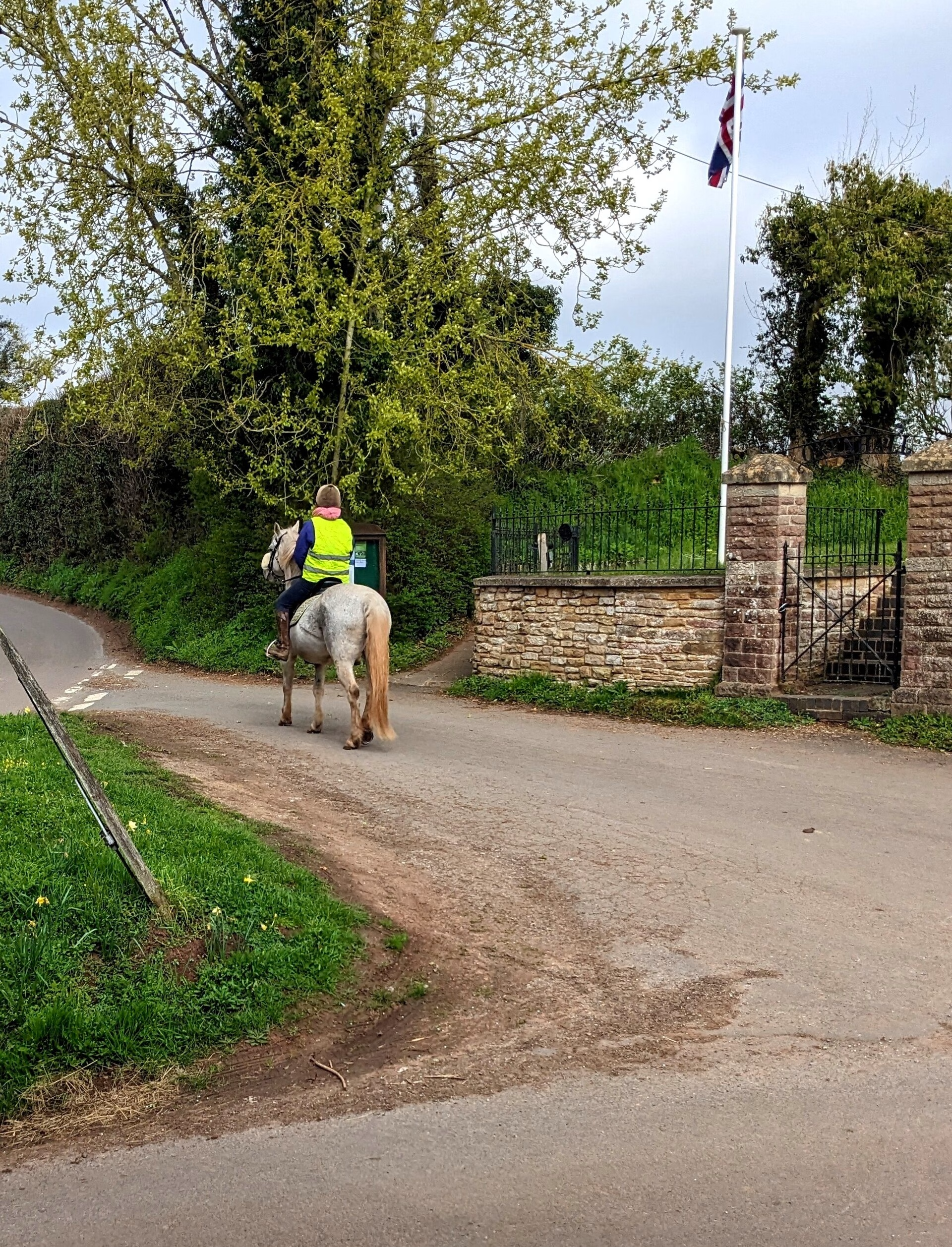
Photographs: Easter horse rider, Oxenhall, Gloucestershire by Jaggery, CC BY-SA 2.0, via Wikimedia Commons.