
Horse riding · Scotland
Horse Riding in Dumfries and Galloway
You ride Dumfries and Galloway on forest tracks in Galloway Forest Park and on the Solway coast, under a legal right of responsible access. The tides on the Solway call for care, and the forests suit riders of most levels.
At a glance
The short answer
- Best monthsApr to Oct
- Riding level
Novice to experienced: forest tracks, with hill and coast ground needing more skill - TerrainForest tracks, hill ground, coastal woods, shore and sands
- Where to rideGalloway Forest Park, Mabie and Dalbeattie forests, the Solway coast
- AccessRight of responsible access under the Land Reform (Scotland) Act
- Long-distance routeSouthern Upland Way, Portpatrick to Cockburnspath, in part
- Stay with your horseCheck stabling or turnout, grazing and lorry parking before you book
Where to ride
Where to ride in Dumfries and Galloway
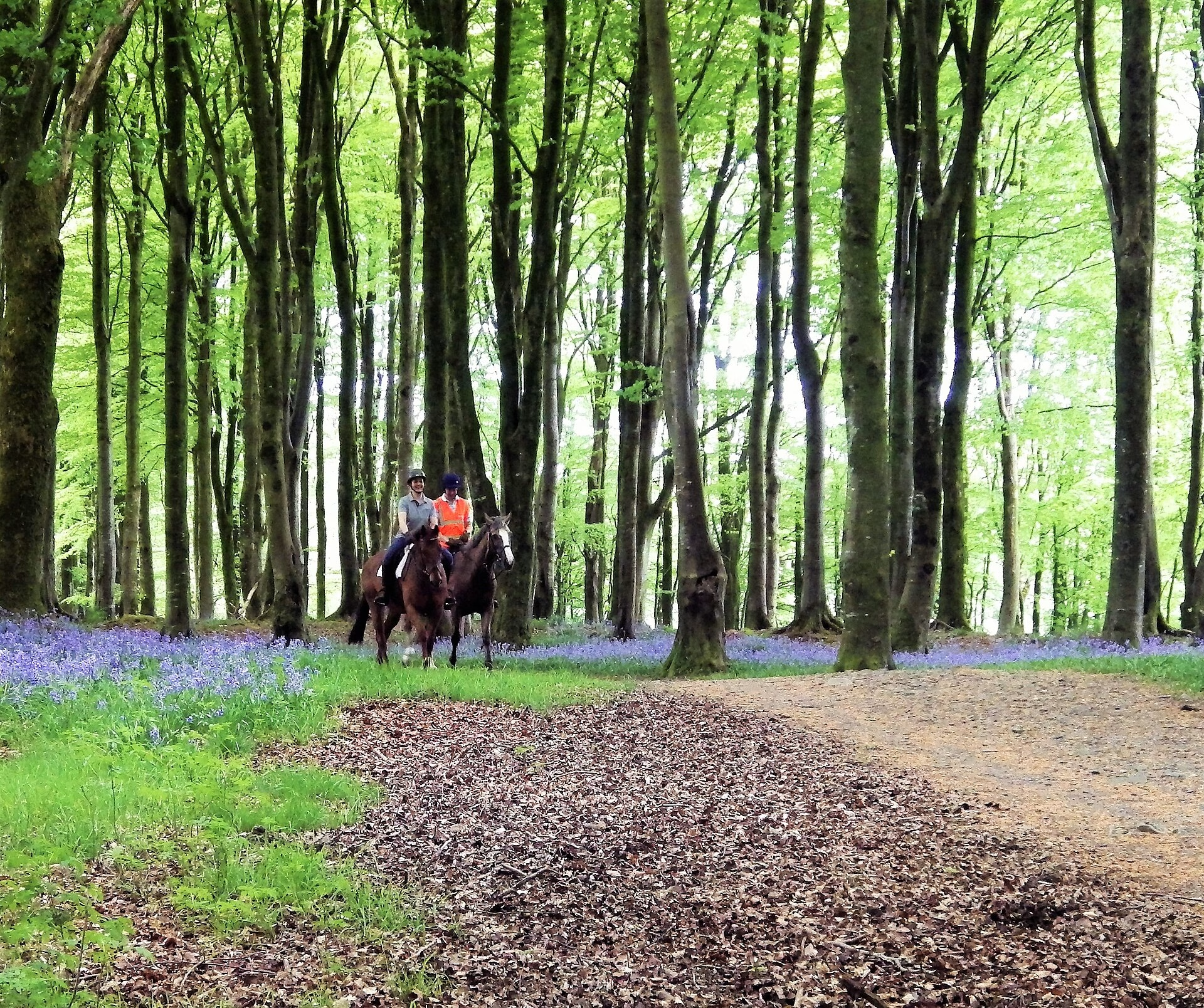
You can ride on forest tracks in Galloway Forest Park and Mabie Forest, and along the Solway coast, in Dumfries and Galloway.
Forestry and Land Scotland calls Galloway Forest Park the largest forest park in Britain, with over 300 square miles in 16 forests across south-west Scotland. It lists red deer and wild goats among the wildlife, and the park is the UK's first Dark Sky Park.
Mabie Forest lies beside the A710 between Dumfries and New Abbey, about 4 miles from Dumfries. Forestry and Land Scotland lists horses as welcome there and describes family-friendly trails for a stroll, a cycle or a horse ride. Of the six forests it lists in the Dumfries and Solway area, Mabie and Dalbeattie are the two it describes with trails for a horse ride, and Dalbeattie also lists horses as welcome.
VisitScotland says the woods and forests of the Solway coast offer an abundance of opportunities for horse riding. A regional project also waymarked 350 km of routes suitable for riders that connect northern England through to Biggar and Dumfries and Galloway.
Rights and rules
The rules for riding in Dumfries and Galloway
The rules are the Scottish ones. The Land Reform (Scotland) Act gives everyone a right of responsible access, and the Scottish Outdoor Access Code says that access rights extend to horse riding.
Dumfries and Galloway Council says everyone has the right to be on most land or inland water for recreation, education and moving from place to place, provided they act responsibly. It adds that neither the council nor a landowner has a duty to maintain a right of way.
The Code says riding on wide paths, tracks and well-drained ground causes few problems. If you ride off the path in winter, it asks you to avoid wet, boggy or soft ground and not to churn up the surface.
Access rights do not apply to houses and gardens, or to land in which crops are growing. The Code asks you to keep to a walk near livestock and to stay out of fields with grazing horses or animals that might be a danger. You need permission for repetitive schooling, jumps or gallops on someone else's land.
In forests, the British Horse Society Scotland advises high-visibility clothing wherever anyone may be shooting, felling or extracting timber. Forestry and Land Scotland asks you to take horse dung home from its car parks and, on a trail, to dismount and kick it to the side.
The Solway coast
Can you ride on the Solway coast beaches?
Generally yes, because the British Horse Society says that in Scotland most beaches are open to non-motorised users, but the Solway needs more care than most coasts.
The Solway Firth is the estuary of the Rivers Eden and Esk. The British Horse Society says quicksand, sinking sand and mud are common in some estuaries, that they may move around and that they are unpredictable and extremely dangerous. It says to check tide times before you go.
HM Coastguard advises you to check the weather and tide times before you leave, to know your escape routes and to tell someone your plans. If you are trapped by the tide, dial 999 and ask for the Coastguard.
The British Horse Society also says many beaches have byelaws, often against breaking in or training horses, that ground-nesting birds may be present from March to July, and that you should scoop droppings. The upper Solway flats and marshes are a Ramsar wetland of international importance for wintering waterbirds, so keep clear of nesting and feeding areas.
Long-distance routes
Long-distance routes for riders in Dumfries and Galloway
The Southern Upland Way crosses the area. The British Horse Society Scotland notes say much of its western half is impassable with a horse or unsuitable for multi-use in wet weather.
Southern Upland Way
Romans and Reivers Route
The notes add that the route was designed as a walking route and some sections were never planned for anyone but walkers, and that each user must judge whether a section suits them. Gates have been fitted to improve access along the eastern, Scottish Borders half of the route, which suits riders better.
A three-day route called the Romans and Reivers Route links Ae, Moffat, Eskdalemuir and Hawick. The stretch between Ae and Moffat is entirely hard forest track and minor public road.
Riding level
Which riders Dumfries and Galloway suits
Dumfries and Galloway suits novice to experienced riders, because the forest tracks give gentle rides, while the hill ground and the Solway sands ask for more skill.
It suits you if
- You want a forest ride on wide tracks in new country
- You are experienced and happy to read the tide and the ground on a coastal ride
- You can plan a route around gates, forest work and livestock
It is not for you if
- You expect the Southern Upland Way to be rideable from end to end
- You plan to ride the Solway sands without checking tide times and local advice
- You want to ride across fields without checking for crops and livestock
If you are newer to riding, you can ride on a hired horse with a local yard on forest tracks. Licensed riding schools and trekking centres in the area can tell you which of their rides suit a first-timer.
When to go
When is the best time to ride in Dumfries and Galloway?
April to October suits Dumfries and Galloway. The Met Office says spring and early summer are normally the driest part of the year in western Scotland, especially April to June.
The Met Office adds that rainfall is below 1000 mm a year along the coasts of Dumfries and Galloway. It names the Solway coast among the sunniest parts of western Scotland. Autumn and early winter are the wettest, especially October to January. Snowfall is normally confined to November to April.
The Code asks riders to avoid regular use of soft or unsurfaced paths in very wet weather, when hooves churn the surface. Red deer live in the forest park. Most red deer stag stalking in Scotland runs from July to mid-October and hind stalking from 21 October to 15 February, so look for notices.
Your own horse
Can you take your own horse to Dumfries and Galloway on holiday?
Yes, and access rights apply to you as a visiting rider in the same way as to a local, so your planning is about the haul and the stay.
We keep three horses of our own at Noonvares Farm in Cornwall. Before one of them travels anywhere we settle where it will sleep and what it will graze or eat. We also check that the fencing is sound and that a lorry can reach the yard and turn.
The Scottish Government says every horse, pony and donkey must have a passport. It should stay with the animal at all times, so your passport travels in the lorry. Check that your insurance covers riding away from home.
The Scottish Government's biosecurity guidance for keepers is to take your own buckets, wash your hands after handling other horses and clean your boots and outer clothing afterwards. A question about vaccination or a long haul is one for your vet, because a vet decides for an individual horse.
If you park away from home, the Code asks you not to block tracks or field entrances. Forestry and Land Scotland does not list horsebox parking at Mabie, so check before you go.
Common questions
Questions about horse riding in Dumfries and Galloway
How big is Galloway Forest Park?
Forestry and Land Scotland says it is the largest forest park in Britain, with over 300 square miles of countryside in 16 forests. It is also the UK's first Dark Sky Park.
Does Mabie Forest welcome horses?
Yes. Forestry and Land Scotland lists horses as welcome at Mabie Forest, beside the A710 between Dumfries and New Abbey. Its visitor page names no horsebox parking, so check before you travel.
Is quicksand a risk on the Solway?
Yes. The Solway Firth is an estuary, and the British Horse Society says quicksand and soft mud in estuaries are unpredictable and extremely dangerous. Check tide times and ask locally before you ride on the sands.
What should you do if the tide cuts you off?
HM Coastguard advises you to find a safe place, dial 999 and ask for the Coastguard. It also advises you to check tide times before you leave and to know your escape routes.
Is the Southern Upland Way open to horses?
Rights of access apply, but the British Horse Society Scotland notes say much of the western half is impassable with a horse or unsuitable in wet weather. Gates have been fitted on much of the eastern section.
Which months have the least rain on the Dumfries and Galloway coast?
The Met Office says spring and early summer are normally the driest part of the year in western Scotland, especially April to June. Autumn and early winter are the wettest.
Where to go next
Where next
Ride in Dumfries and Galloway
Tell us your dates and your level, and we will point you to the right ride in Dumfries and Galloway for you.
Photographs: Horse Riding in the Forest, Dumfries and Galloway by Jon Alexander, CC BY-SA 2.0, via Wikimedia Commons.