
Horse riding · England
Horse Riding in Dorset
Dorset's riding is heathland tracks at Wareham and Studland, chalk ridge bridleways above the coast and a few multi-user trails. Bridleways cover about two fifths of the rights of way, so plan each route.
At a glance
The short answer
- Best monthsBridleways all year; Studland beach riding from October to April
- Riding level
Novice to experienced, by route - TerrainHeathland, chalk ridges and woodland tracks
- Where to rideWareham Forest, Studland and the South Dorset Ridgeway
- AccessBridleways and restricted byways; beach riding by permit in season
- Rights of way1,092 miles of bridleway in the county
- Long-distance routeSouth Dorset Ridgeway, mostly bridleway
Where to ride
Where to ride in Dorset
The best-documented riding you can plan around is on the heathland and chalk ridge at Studland and in Wareham Forest, with the South Dorset Ridgeway for longer days above the coast.
The National Trust describes a network of bridleways crossing the heathland and chalk ridge at Studland, which you can use all year. Horsebox parking is in the left-hand pay-and-display car park at Knoll Beach.
Forestry England says horse riding is permitted at Wareham Forest, where there are many miles of tracks through heathland and woodland. Recreational riders there need no permit, and you follow signed no-go areas and local signage.
The South Dorset Ridgeway is mostly bridleway with some shorter sections of footpath, according to Dorset Council. You should plan the footpath sections before you set out, because a horse may not use them.
The North Dorset Trailway is a multi-user route that suits riders. None of the Dorset Council car parks along it take trailers, so you need to arrange parking at Fiddleford Mill or Spetisbury before you go.
Rights and rules
The rules for riding in Dorset
You may ride on bridleways and restricted byways, and you have no legal right to ride on footpaths, although a landowner may grant permission. That is the British Horse Society's summary of the law in England.
Dorset Council's rights of way improvement plan records 2,855 miles of public rights of way, of which 1,092 miles are bridleway. It states that walkers can use all of them, while riders and cyclists are limited to about two fifths of the network.
The South West Coast Path is mostly a footpath, so the Path says you generally cannot ride it. You will find the riding on the ridges inland and on the bridleways rather than along the cliff edge.
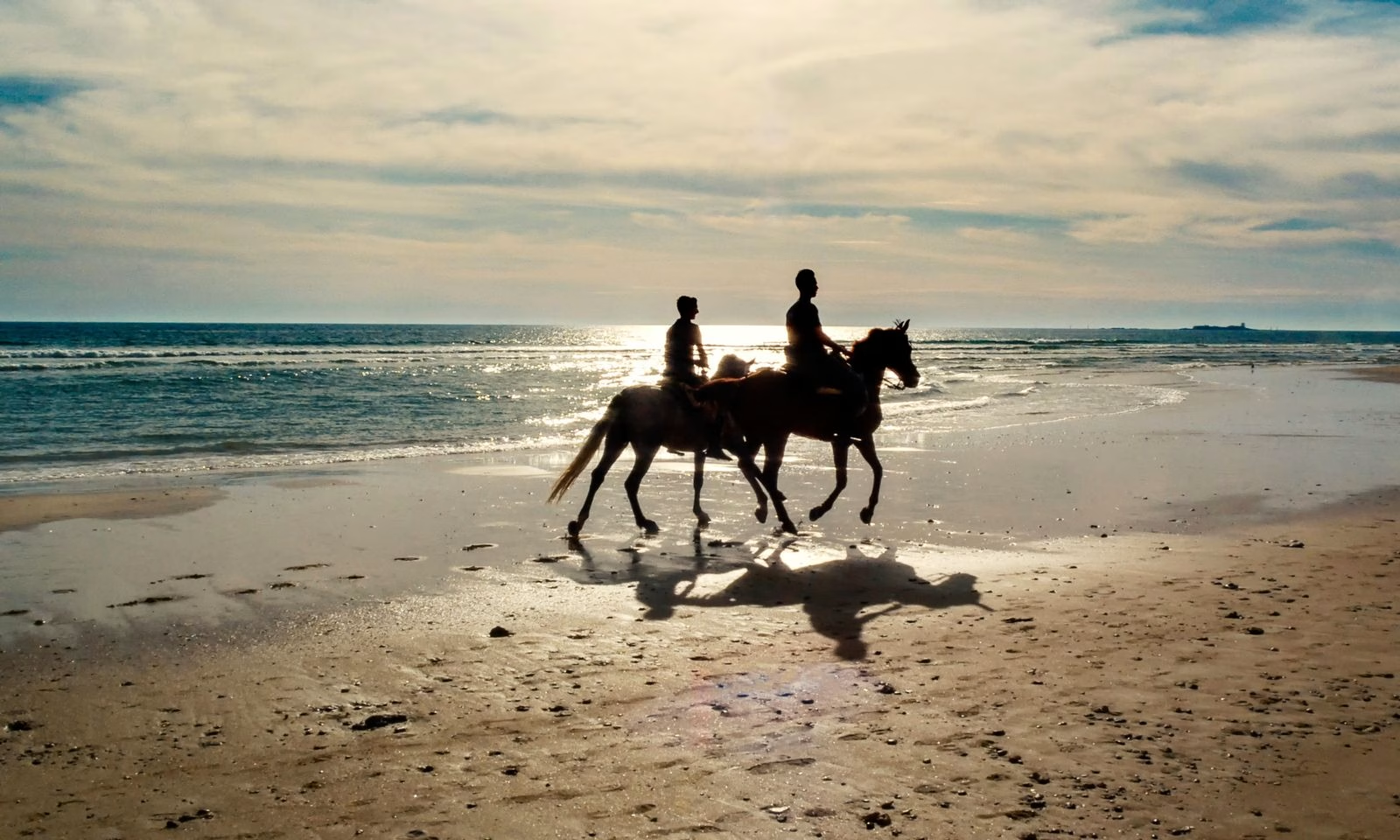
At Studland, the National Trust allows beach riding between 1 October and 30 April with a permit, and no riding on the beach from 1 May to 30 September. It asks riders to stick to the tide line, not to gallop and not to ride in the dunes. For the rules on other UK beaches, see horse riding on the beach in the UK.
The Lulworth Ranges are Ministry of Defence land. Public access ends when red flags fly by day or red lamps burn by night, and the firing weekends are published, so you should plan any ride near the ranges around them.
Forestry England says it cannot accept large scale permission applications in the ground-nesting bird season, which shows how much the breeding season shapes use of the heath.
Long-distance route
Long-distance bridleways in Dorset
The South Dorset Ridgeway is the route to know, because Dorset Council describes the majority of it as bridleway, with some shorter sections of footpath.
It follows a ridge with coastal views and passes through a landscape of Neolithic and Bronze Age features. The council notes steep climbs at either end that then level out.
The Wessex Ridgeway is a separate 136 mile route from Marlborough in Wiltshire to Lyme Regis in Dorset, and it crosses Cranborne Chase. Check each section against the rights of way map before you plan it for a horse.
Rider level
Which riders Dorset suits
Dorset suits novice and confident riders best, with some steep ridge climbs that want an experienced seat.
Novice
Confident rider
Experienced rider
Riding alone, unfamiliar with the land
When to go
When is the best time to ride in Dorset?
Bridleways at Studland are open to you all year, so your choice of month comes down to the beach and the weather.
If you want to ride on Studland beach, go between October and April, because the National Trust allows no beach riding from May to September. Within that window, the National Trust sets a morning cut-off on Saturdays and Sundays and on most school holiday and bank holiday days, so check the hours when you apply for a permit.
Forestry England restricts large scale permissions at Wareham Forest in the ground-nesting bird season, and ordinary riders follow the signed no-go areas and local signage all year.
Your own horse
Can you take your own horse to Dorset on holiday?
Yes, and horse parking is the first thing to settle, because several of the best starting points have limited space for a lorry.
We keep three horses ourselves, a Welsh cob, a Shetland pony and a moorland pony. Before one of ours sleeps away from home, we check for stabling or secure turnout, grazing or hay and a yard where a lorry can turn.
At Studland the horsebox parking is in one car park at Knoll Beach. Along the North Dorset Trailway the council car parks do not take trailers, so book a base with its own parking.
GOV.UK says the passport must stay with the horse at all times, including at its stable and when you move it. The sport's governing body asks you to keep flu vaccination up to date and not to share buckets or haynets away from home. A vet decides for an individual horse.
Common questions
Questions about horse riding in Dorset
Can you ride on the beach in Dorset?
At Studland, yes, between 1 October and 30 April with a National Trust permit. No riding is permitted on the beach from 1 May to 30 September. Riders stick to the tide line, do not gallop and keep out of the dunes.
Do you need a permit to ride in Wareham Forest?
Forestry England says recreational riders do not need a permit at Wareham Forest. Only commercial activity, or carriage drivers needing barrier access, must apply for permission. You still follow signed no-go areas and local signage.
How many miles of bridleway are there in Dorset?
Dorset Council's rights of way improvement plan records 1,092 miles of bridleway out of 2,855 miles of public rights of way. That is about 38 per cent of the network.
Can horses use the South West Coast Path in Dorset?
Generally not. The Path states that nearly all of it is a public footpath rather than a bridleway. The South Dorset Ridgeway is the bridleway alternative, and the council says most of it is bridleway.
Can you ride near the Lulworth Ranges?
Check first. The Ministry of Defence publishes firing times, and public access is prohibited when red flags fly by day or red lamps burn by night. Plan around the published weekends and stay outside the range boundary.
Where can you park a horsebox on the North Dorset Trailway?
None of Dorset Council's car parks along the route take trailers. The trailway site suggests Fiddleford Mill car park, reached by a short bridleway, or Spetisbury School car park, which it asks riders to avoid on weekdays in school terms.
Where to go next
Where next
Ride in Dorset
Tell us your dates and your level and we will point you to the right ride on the Dorset heath or ridges.