
Horse holidays · UK
Horse Holidays in the UK
Most horse holidays mean riding horses somebody else keeps, and they vary far more than the brochures suggest. This is what the kinds are like, written from a farm in west Cornwall where we keep horses ourselves.
At a glance
What should you know first?
- KindsA taster, a centre-based week, a trail or a ranch week
- LengthTwo or three days up to a fortnight
- Hours in the saddleOne or two a day at a centre, five or six on a trail
- BringA hat that fits and boots with a heel
- Own horseA smaller market, needing stabling and grazing
- Our farmOne cottage, with stabling for two horses
The basics
What is a horse holiday, and who is it for?
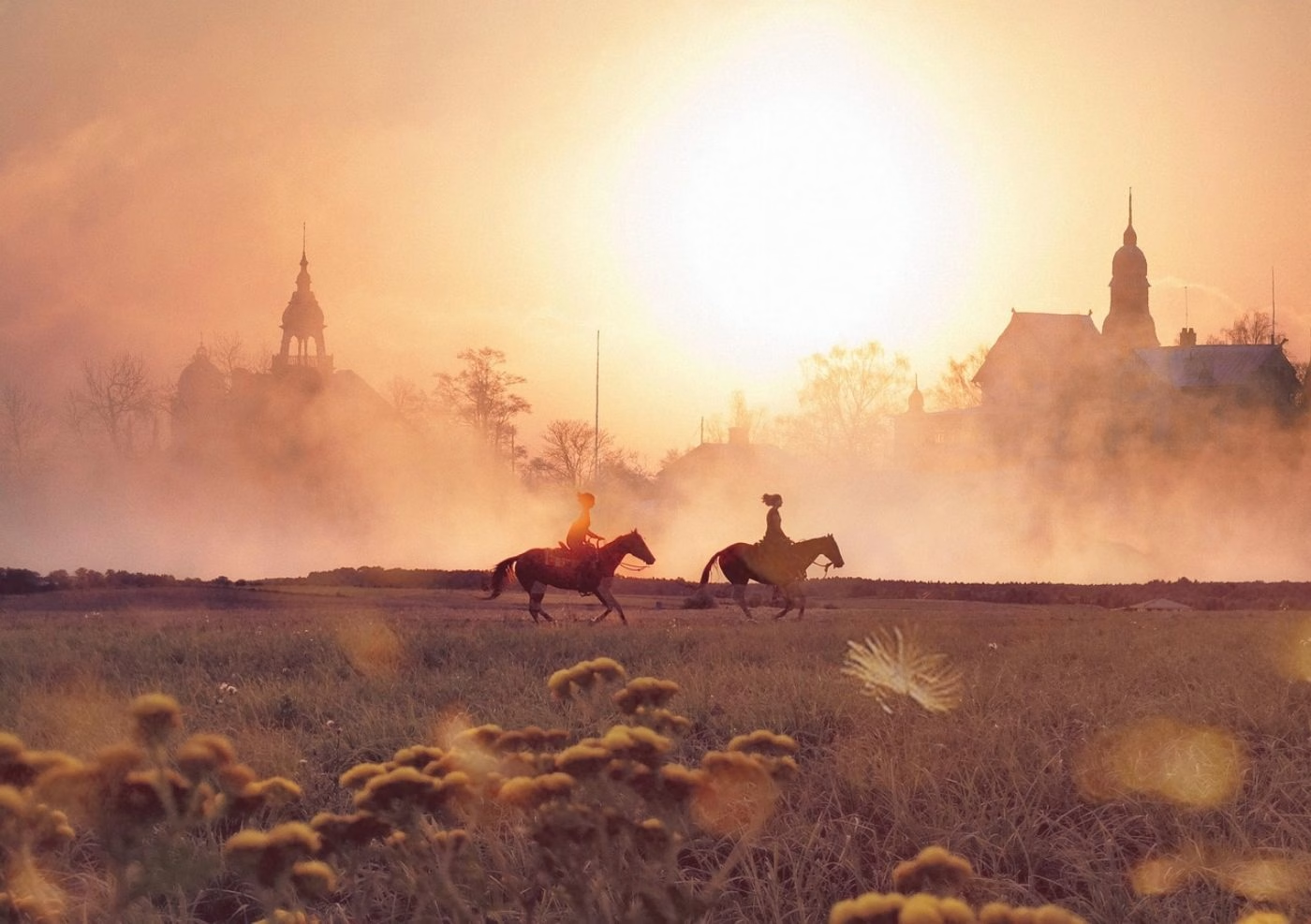
A horse holiday almost always means a riding holiday: the horses, the guide and usually the route are provided, and you bring a hat and boots.
They range from two or three days at a British centre to a fortnight in the saddle abroad. A smaller number of people travel with their own horse instead.
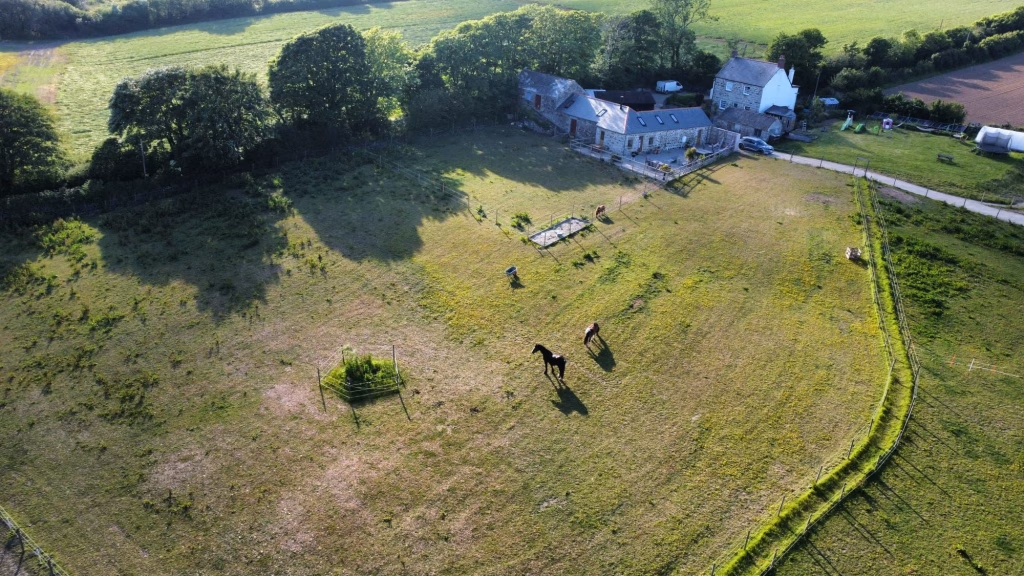
We are a working farm in west Cornwall with stabling for two horses, grazing and one holiday cottage. The rest of the animals people come to stay with are in the fields around it. There is no booking portal here. What we have is horses of our own, and a clear view of what these holidays involve.
The kinds
What kinds of horse riding holiday are there?
There are four main shapes. What changes between them is how long you are away, how much of each day you spend riding and how much riding you need to have done before you go.
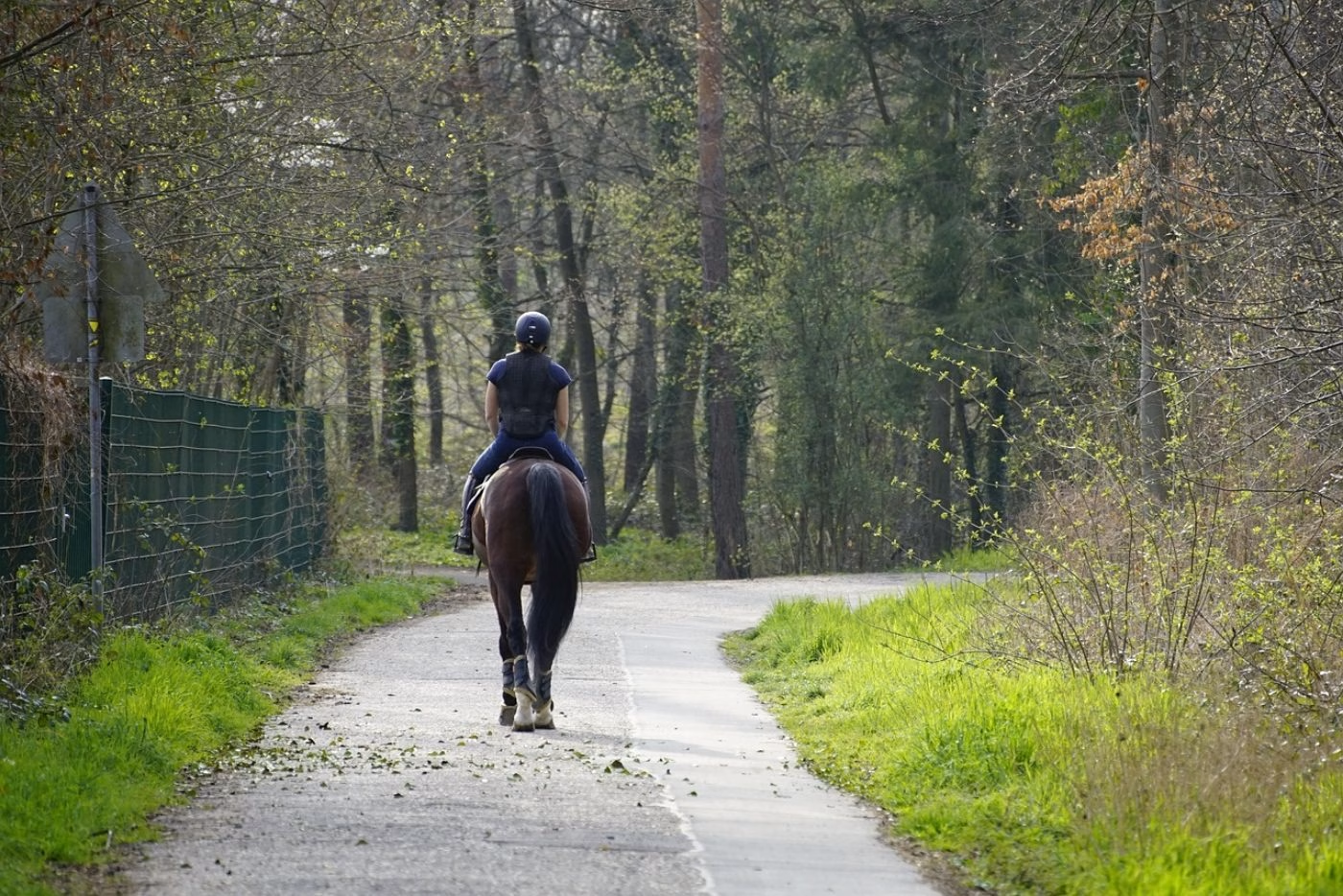
A couple of days at a British centre is often somebody's first riding holiday. It is close enough to home to be a low-cost way of finding out whether you want more of it. At the other end, a fortnight point to point is a serious undertaking. It means five or six hours a day on ground that keeps changing, on a horse you met on the Monday.
By the third or fourth day of a proper riding week something changes. You stop thinking about your hands and your legs. The horse stops testing you, and you start looking at the country instead of at the ground in front of you. That is the part people go back for, and it is the reason a week is worth more than two long weekends.
Most people who ride once a week are comfortable with the first three shapes in the table and would want to build up to the fourth. Where a holiday happens changes it more than the label does. Riding holidays on Dartmoor is the fullest example we have written of one piece of ground and what it asks of a rider.
A taster or short break
A centre-based week
A trail or trekking holiday
A ranch week
Where to ride
Where do people go on a horse riding holiday?
Horse riding holidays is the parent of the country guides. It sets out which countries suit which kind of rider, what a week is like in each and what to ask an operator before you book.
For riding in Cornwall, including the beaches and Bodmin Moor, see horse riding in Cornwall. The cover a riding week needs is a separate question, and horse riding travel insurance sets out which clauses decide whether it is covered at all.
Every country guide is listed further down, with one line on what the riding there asks of you.
Your own horse
Can you take your own horse on a UK horse holiday?
Yes, at properties with stabling and grazing. It is a much smaller part of the market and the one we know best, because it is what we offer here.
You travel with your horse and stay somewhere with stabling and grazing. There is no unfamiliar animal and no matching problem, and a different set of things to get right instead: transport, paperwork, water, feed and the night check. All of it is set out on take your horse on holiday.
The stabling here is two stables and grazing, beside one cottage. It is a relaxed arrangement rather than a livery yard. Guests who bring a horse have it in view from the kitchen window, which is most of the reason people who do this once do it again. The horses themselves are introduced on our Cornwall horse family.
Everything else here is somebody else's horse, in somebody else's country, and we say so where that is the case.
The wider cost
What does a horse holiday cost you beyond the price?
The main cost is time. A riding holiday is not a lie-in holiday, because the horses are fed and mucked out on their schedule. Good operators expect you to be part of that, or at least to be up.
There is a physical cost too, if the holiday is a trail rather than a centre-based week. If you bring your own horse, add a day at each end for travel and settling that brochures leave out.
Prices for other people's holidays are left to the operators, so ask what is included, and specifically whether hats, insurance and transfers are. You need a hat that fits you and meets a current standard, and boots with a heel. Most centres lend hats. A hat that has been dropped no longer offers what it was made to offer, so it is a fair thing to ask about.
Where we fit
Where do we fit among horse holidays in the UK?
We own one cottage, on this farm, with stabling for two horses and grazing, and the goats and the birds of prey in the next field.
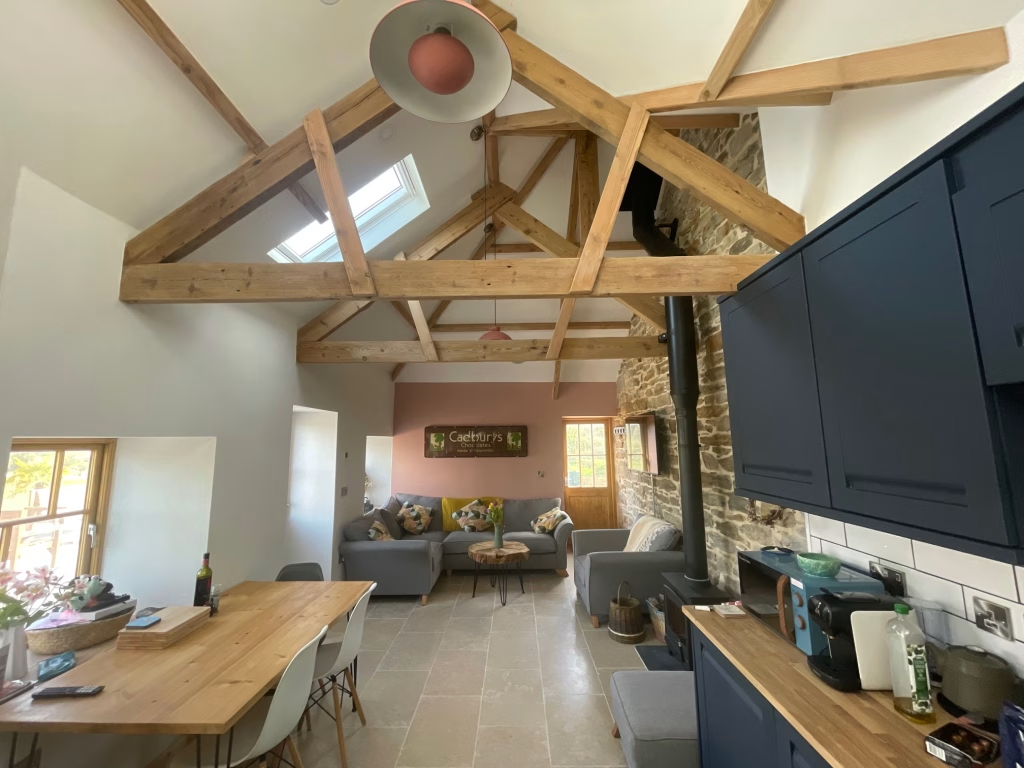
That is the whole of what we own and that is its size. The cottage is described on Gwel-an-Derowen, and the farm stay as a whole on stay on a farm with animals.
For everything beyond the cottage, tell us what you are after and we will put you with the people who run it.
Every country we cover
Where can you ride, and what is each country like?
Each page says what the riding asks of you, in hours, pace and terrain, before it says anything else. If a country is not here yet, it has not been written up yet, and that says nothing against the riding.
The riding holiday people enjoy most is almost never the one with the most miles in it.
Elizabeth Adey's view, from keeping horses on this farm, is to pick the week that matches the riding you do now. Do not pick the riding you mean to be doing by spring. A horse will find out which of the two you are within about an hour.
Dr Elizabeth Adey, Noonvares Farm, west Cornwall
Common questions
Questions people ask before booking a horse riding holiday
What is a horse riding holiday?
A holiday built around riding horses that somebody else keeps. The centre or operator supplies the horse, the guide and usually the route, and you bring a hat and boots. It is what most people mean by a horse holiday.
How do you choose between a centre-based week and a trekking holiday?
Choose by how much time you want in the saddle. A centre-based week is one to three hours a day from the same base. A trekking holiday is most of the day, moving on each night. One is rest and the other is adventure, and the brochures rarely say which they are selling.
Are horse riding holidays suitable for beginners?
Centre-based ones generally are, and most centres teach beginners. Trekking and trail holidays are not, whatever the listing says, because five hours a day on changing ground asks for a rider who is used to it.
How long should a first riding holiday be?
Two or three days is enough to find out whether you want more of it, and a week is where the riding starts to change how you sit. A fortnight is for people who already ride several times a week.
Can you take your own horse on holiday in the UK?
Yes, at properties with stabling and grazing, and it is a much smaller market than the guided one. What to check first is set out in take your horse on holiday.
When is the best time to book?
For the UK, spring and early autumn ride best and the good weeks go months ahead. For a specific week in a school holiday, book a long way out. For a quiet week, ask what is left in October.
Do you arrange the holiday, or do we book it ourselves?
We keep horses and let one cottage with stabling in west Cornwall, and that cottage you book with us. For a riding holiday somewhere else, tell us what you are after and we will put you with the people who run it.
Where to go next
More on horses, from this farm
Tell us how you ride
Tell us what you have ridden, how much time you want in the saddle and roughly where you fancy going, and we will talk it through.