
Horse Riding in Cornwall: Beaches, Moors and Stables
Where you can actually ride in Cornwall, what a riding centre will want to know before it puts you on a horse, and what to check about the beach before you go.
Where can you ride a horse in Cornwall?
In three kinds of place. On sand, at beaches including Perranporth, Marazion and Holywell Bay, worked around the tide. On Bodmin Moor, which is open, rough and the closest thing to unrestricted riding in the county. And on inland trails such as the Camel Trail, which follows a disused railway along the river.
We keep horses in west Cornwall, so what follows is written from riding here rather than from a brochure. The county is genuinely good for it. It is also more regulated, more tidal and more seasonal than most people expect, and those three things are what actually decide where you end up riding.
Beach horse riding in Cornwall, and the two things that govern it
Riding on sand is the reason most people come, and Perranporth, Marazion and Holywell Bay are the names that come up most. All three are wide, and all three change completely with the tide.
The tide is the first constraint. A beach ride is booked around low water, not around your afternoon, which is why riding centres will offer you a time rather than let you choose one.
Local restrictions are the second, and they are the part nobody publishes clearly. Access for horses is set beach by beach and season by season. We could not find a single consolidated list of horse restrictions on Cornwall Council’s website when we looked on 6 September 2026, so we are not going to print one. Ask the riding centre. They book around it every day and they will know this week’s position.
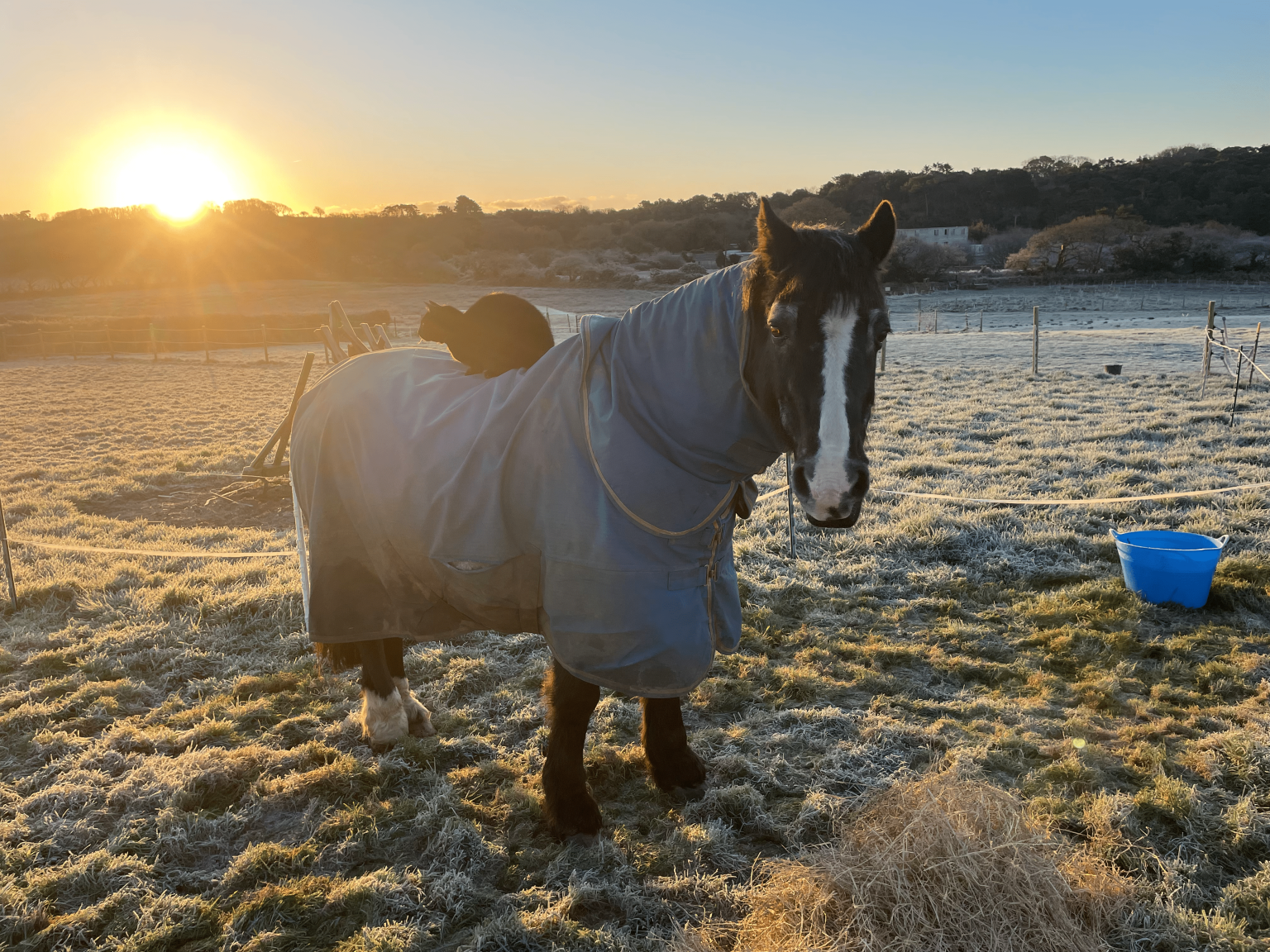
Sunrise on the farm in February. Winter riding in Cornwall is frost rather than snow, most years.
Bodmin Moor and the inland trails
Bodmin Moor is granite tors, heather and open ground, with stone circles and old mining ruins scattered across it. It rides very differently from the coast: longer, rougher, and quiet in a way the beaches never are in August. Dartmoor, over the border in Devon, is the same idea at a larger scale, and it is the one place in England where you can ride all day and barely meet a road.
The Camel Trail follows a disused railway line along the River Camel, which makes it flat, surfaced and easy to navigate. Or useful when the moor is too wet to be sensible.
What a riding centre will ask you before it books you in
More than people expect, and the good ones ask the most. Weight, because every horse has a limit and a centre that does not ask is not matching you to an animal. Real experience rather than aspirational experience, since "I rode as a child" and "I ride weekly" are two different bookings. Age, for the children. And whether anybody in the party has ridden on sand before, because a horse on an open beach behaves differently from a horse in a school.
Answer all of it honestly. The single most common way a beach ride goes wrong is somebody overstating what they can do.
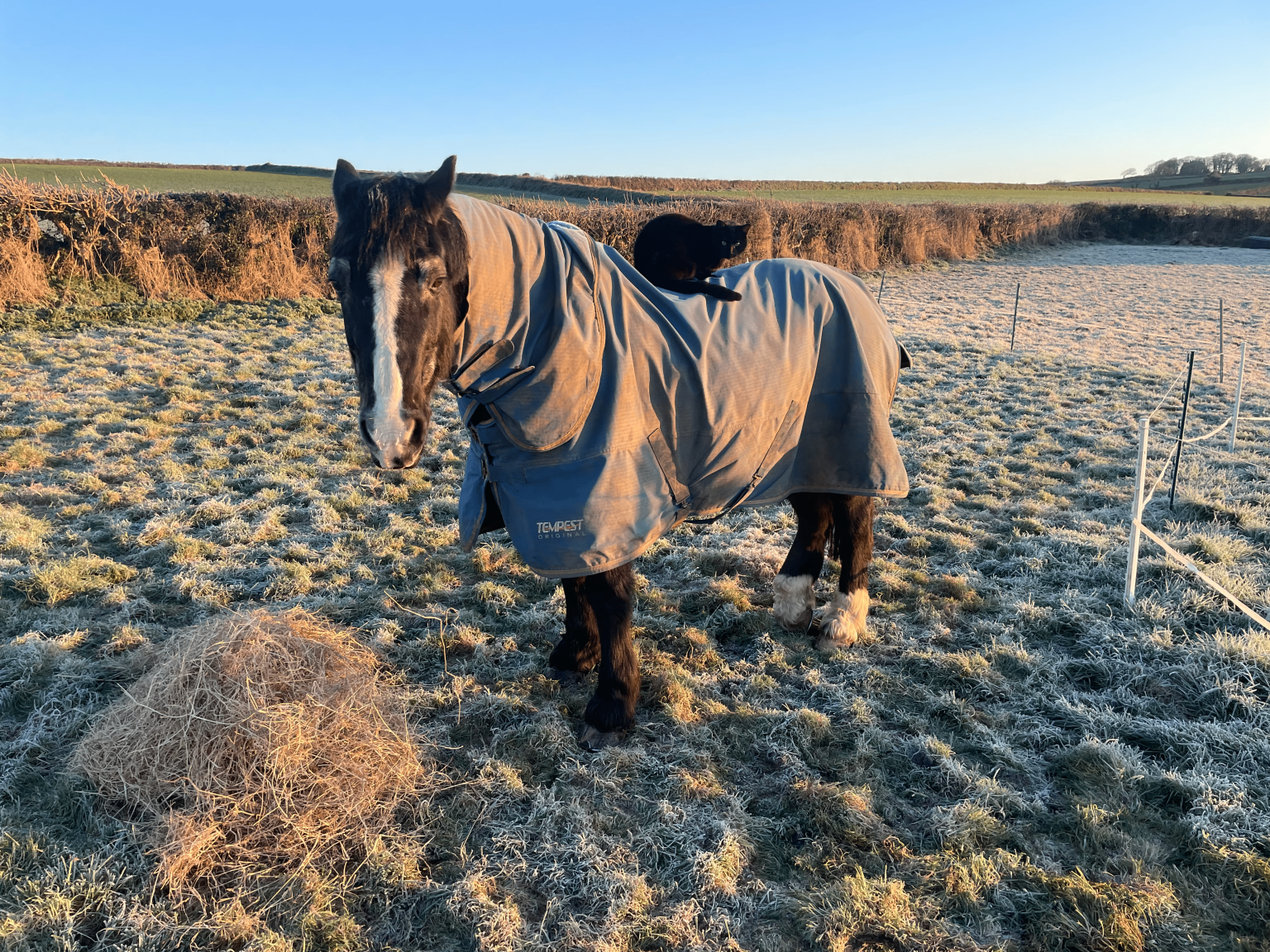
One of our horses in a frosty field at sunrise, with the farm cat on its back.
What to ask before you book a ride here
- Is this a beach ride or a school lesson? Both are sold as "horse riding in Cornwall" and they are not the same day out.
- What is the tide doing? If the centre has not mentioned the tide for a beach ride, ask why.
- Is the beach open to horses this month? It varies by beach and by season.
- What is the weight limit? Every centre has one. A centre that will not say has not thought about the horse.
- How many riders per guide? On sand it matters more than it does inland.
Our own judgement, from keeping horses in west Cornwall. We do not run a riding centre and this is not a recommendation of any particular one.
When to come and ride in Cornwall
May, June and September are the best riding months here. July and August are hot, the beaches are busy, and the good slots go early. Winter is quiet and often beautiful, and it is when the ground decides what is possible. The photograph above was taken in February.
Riding in Cornwall with your own horse
Bringing your own is a different holiday and a much smaller market, which is why almost nobody writes about it properly. There is stabling for two horses and grazing here at the farm, and what to check before you travel is set out in take your horse on holiday.
If you are looking at riding holidays across the UK rather than in Cornwall, the wider picture is in horse riding holidays UK. Cornwall is a good place to find out whether you want a week in the saddle rather than an hour. If you do, the riding is gentler in Ireland and Portugal, hotter and faster in Spain, stranger in Iceland, and genuinely long in Argentina and South Africa.
Where to stay
Our own cottage sits on a working farm a few miles from the north coast, with the horses, the pygmy goats and a hot tub. It is described in full on stay on a farm with animals.
Bridle Notes
The questions people ask before they book a ride down here.
Can you ride a horse on the beach in Cornwall?
Yes, at several beaches, but access is set locally and changes with the season, and every ride is worked around the tide. Book through a centre that rides that beach regularly rather than turning up.
Which Cornish beaches can you ride on?
Perranporth, Marazion and Holywell Bay are the names that come up most often for organised rides. Because restrictions vary by beach and by month, treat any list, including this one, as a starting point and confirm with the centre.
Do you need experience to ride in Cornwall?
No. Most centres run lessons and led rides for complete beginners. A beach ride is usually not the place to start, because open sand asks more of a rider than a school does.
Is horse riding in Cornwall suitable for children?
Generally yes, and most centres set a minimum age and a weight limit. Ask what the youngest rider will actually be doing, because "family friendly" covers everything from a led pony to a full ride.
How much does horse riding in Cornwall cost?
It varies by centre and by ride length, and we do not publish a figure we have not checked this month. Ask what is included, particularly hats and insurance.
When is the best time of year to ride in Cornwall?
May, June and September. The weather is reliable enough, the beaches are quieter than in high summer, and the ground is neither baked nor waterlogged.
Written from keeping horses in west Cornwall. The place names, the tide constraint and the questions to ask are ours. We looked for a single consolidated list of horse access restrictions on Cornwall Council’s website on 6 September 2026 and could not find one, which is why this page tells you to ask the riding centre rather than printing rules we cannot source. We do not run a riding centre.